
Isinglass windows are a popular feature on boats because they provide clear visibility while offering protection from wind, spray, rain, and changing weather conditions. These flexible clear panels are commonly used in boat enclosures, curtains, and dodger systems. However, keeping them crystal clear can be surprisingly challenging.
Unlike ordinary glass, isinglass is usually made from flexible clear vinyl or similar marine-grade plastic. Its surface can scratch easily, become cloudy, develop water spots, or turn hazy when it is cleaned with the wrong products or techniques. Even a small amount of sand or dried salt can create permanent-looking scratches if it is rubbed across the surface.
The good news is that cleaning isinglass windows without scratching them is relatively simple when you use the right approach. The key is to remove abrasive particles before wiping, use plenty of clean water, choose a suitable cleaner, and avoid unnecessary pressure.

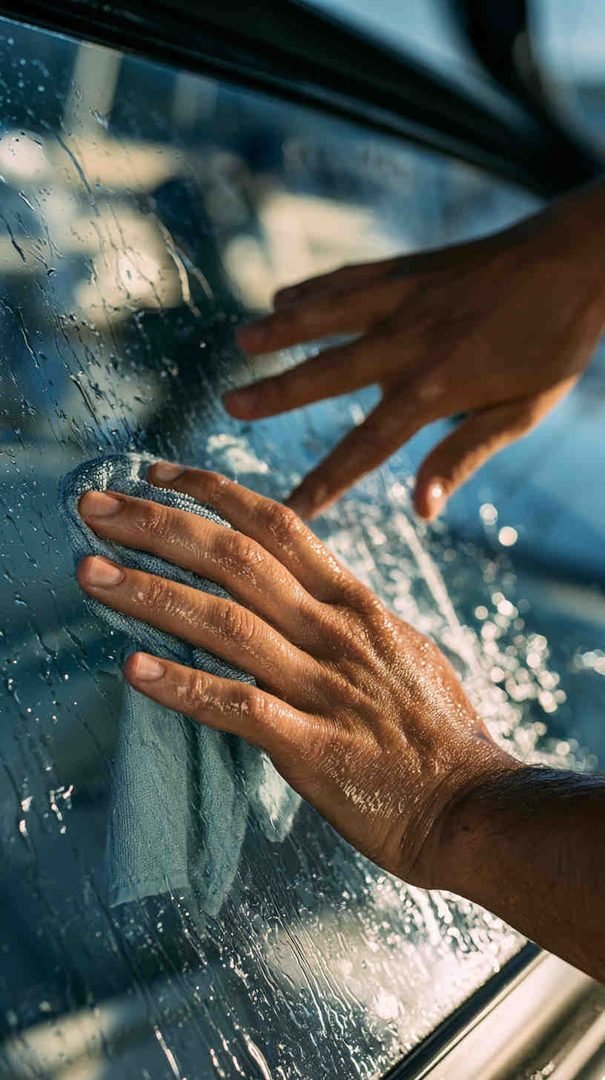
Why Isinglass Windows Scratch So Easily
The biggest mistake people make when cleaning isinglass is treating it like household glass.
Glass is hard and resistant to many forms of surface abrasion. Isinglass, on the other hand, is much softer. Fine particles of sand, salt, dirt, and dried debris can act almost like sandpaper when dragged across the surface.
This is especially important on boats. Salt spray can dry onto an enclosure and leave tiny crystals behind. If you immediately wipe the panel with a dry cloth, those crystals can scratch the material.
Another problem is using household glass cleaners. Products designed for glass may contain ingredients that are unsuitable for flexible vinyl or plastic windows. Some cleaners can gradually damage protective coatings, cause cloudiness, or leave the material looking dull.
Therefore, the safest cleaning method is gentle and deliberate rather than aggressive.
1. Start by Rinsing the Isinglass Thoroughly
The first and most important step is removing loose dirt.
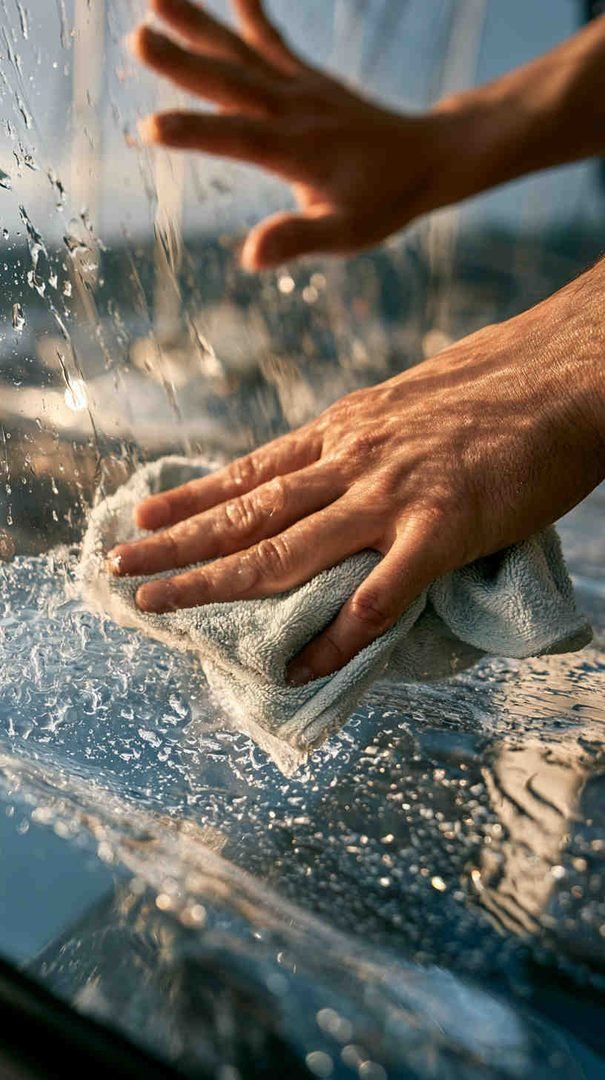
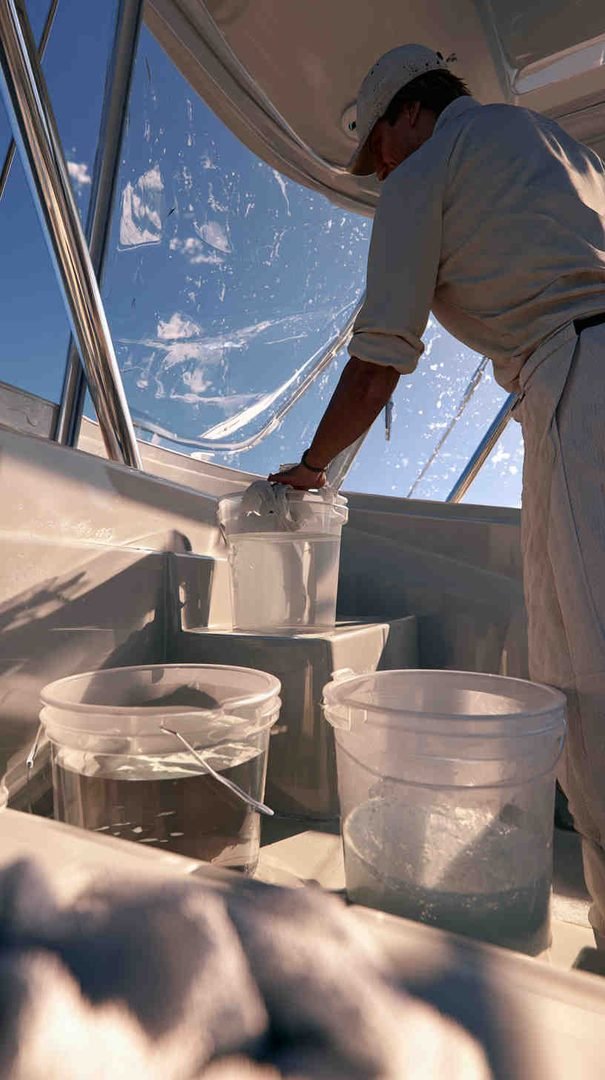
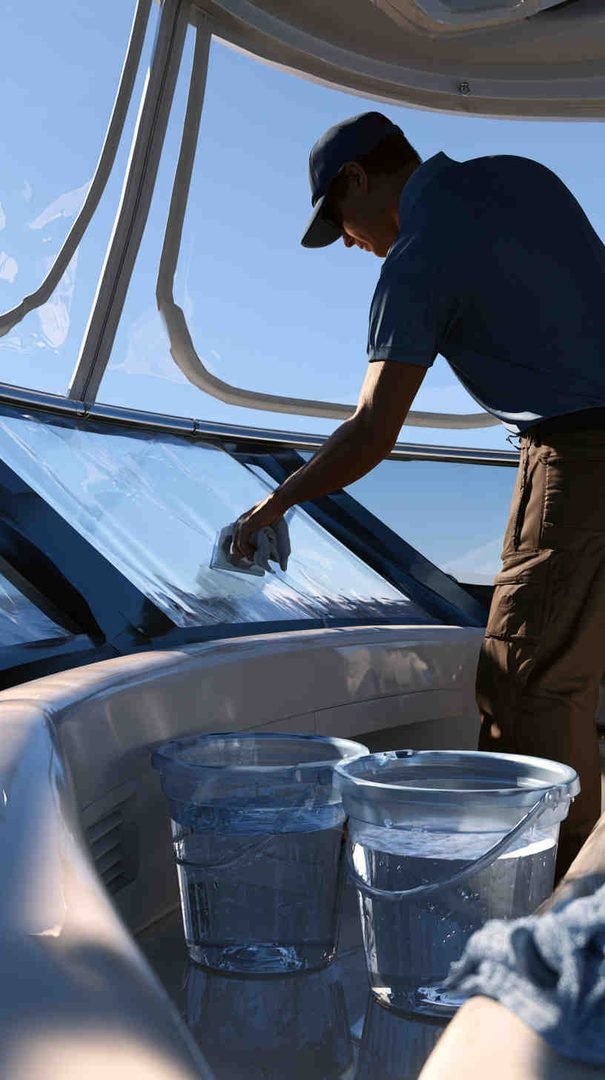
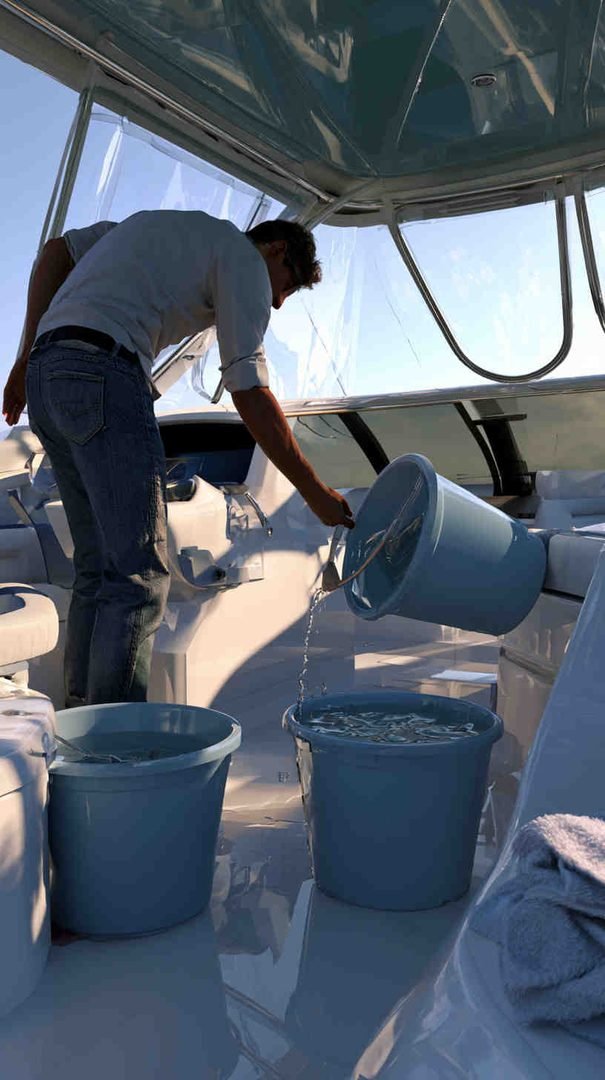
Before touching the surface with a cloth, rinse the isinglass with plenty of fresh, clean water. The goal is to wash away loose sand, salt, dust, and other particles that could scratch the panel during wiping.
Never begin by rubbing a visibly dirty or sandy window.
If the panel has heavy salt buildup, allow fresh water to soften the deposits for a few minutes. Avoid using a high-pressure spray directly against the surface because excessive pressure can stress the material or force debris against it.
A gentle stream of water is usually sufficient.
Cleaning idea: Rinse before every wipe
Even when the window looks only slightly dirty, make rinsing the first step. This simple habit can significantly reduce the chance of creating fine scratches over time.
2. Use a Mild Cleaner Made for Clear Marine Vinyl
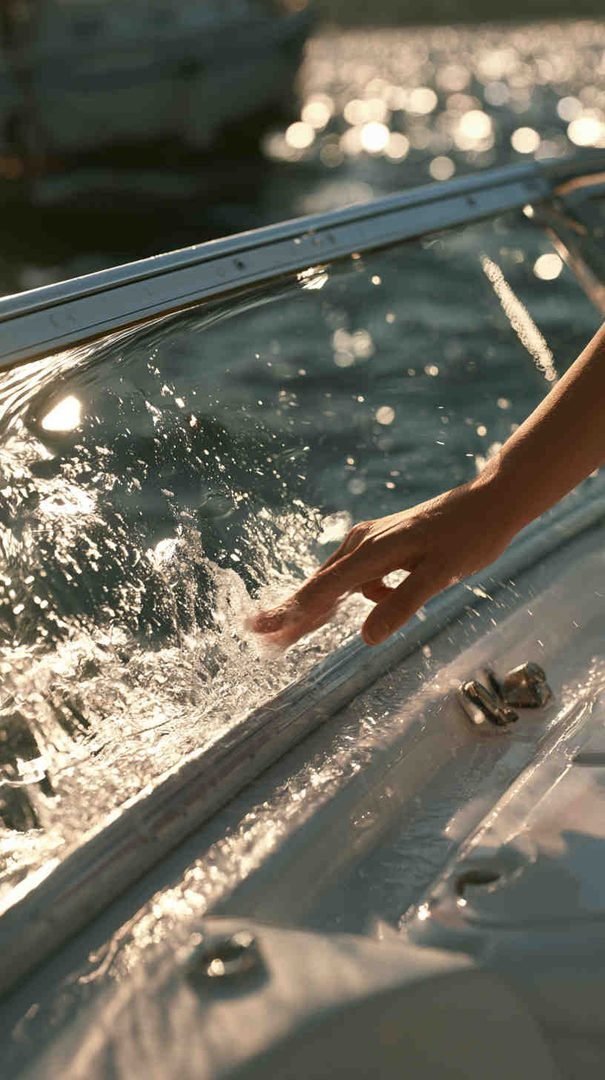
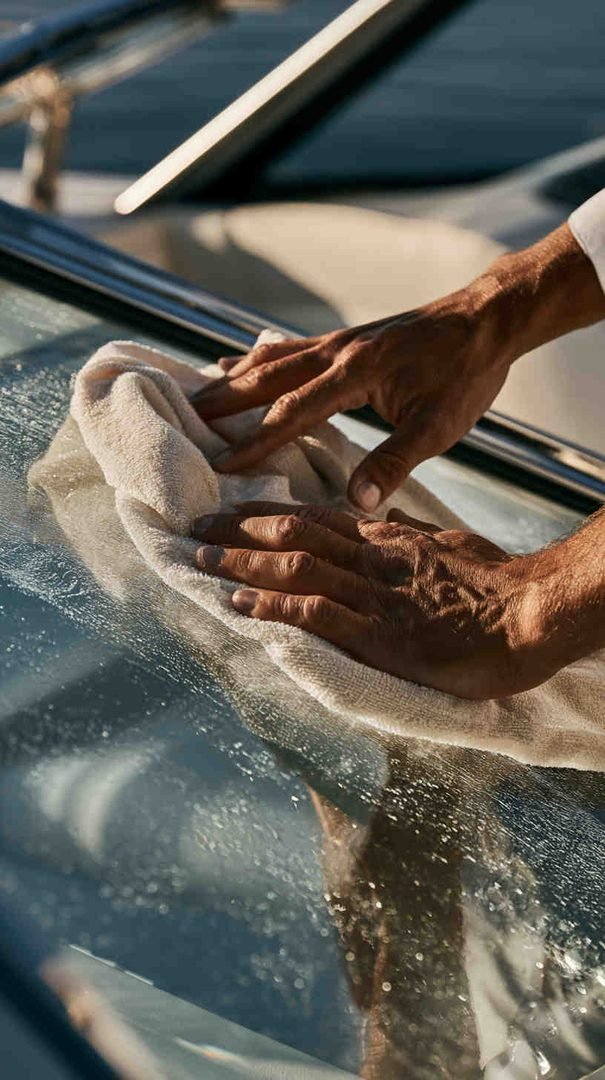

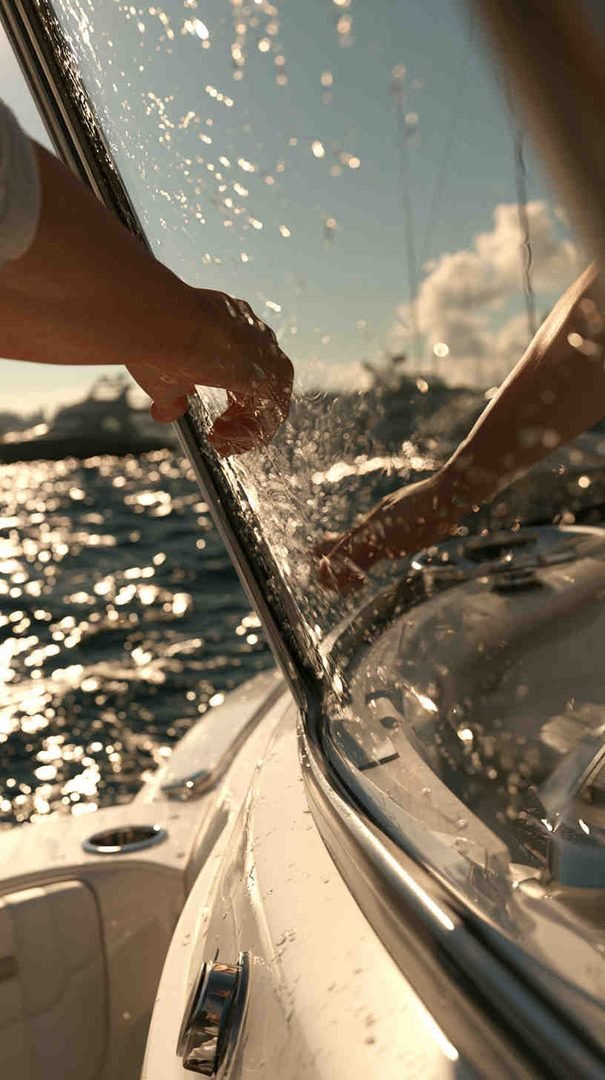
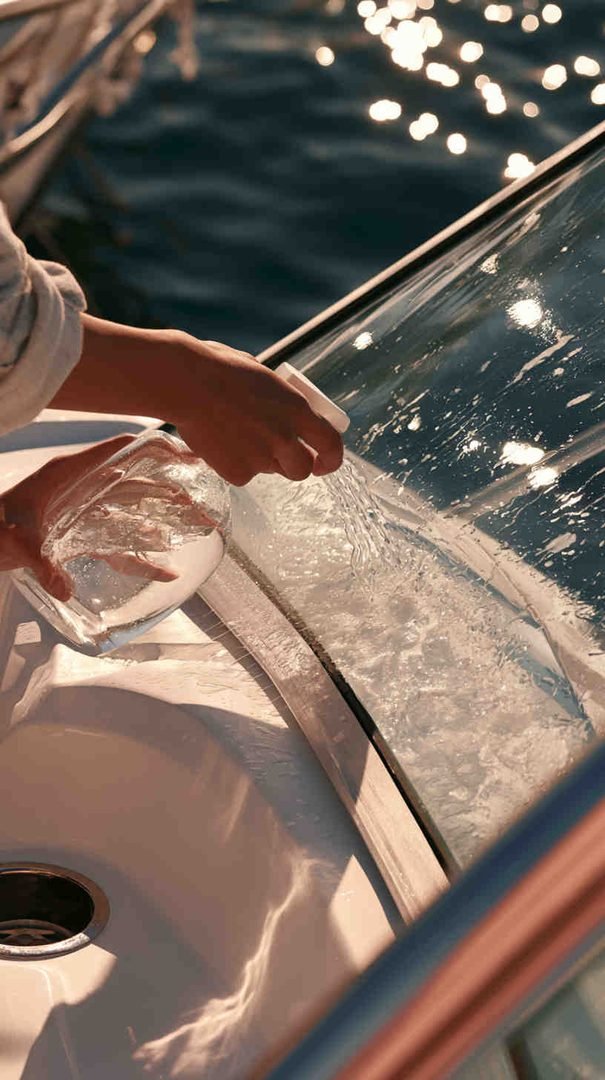

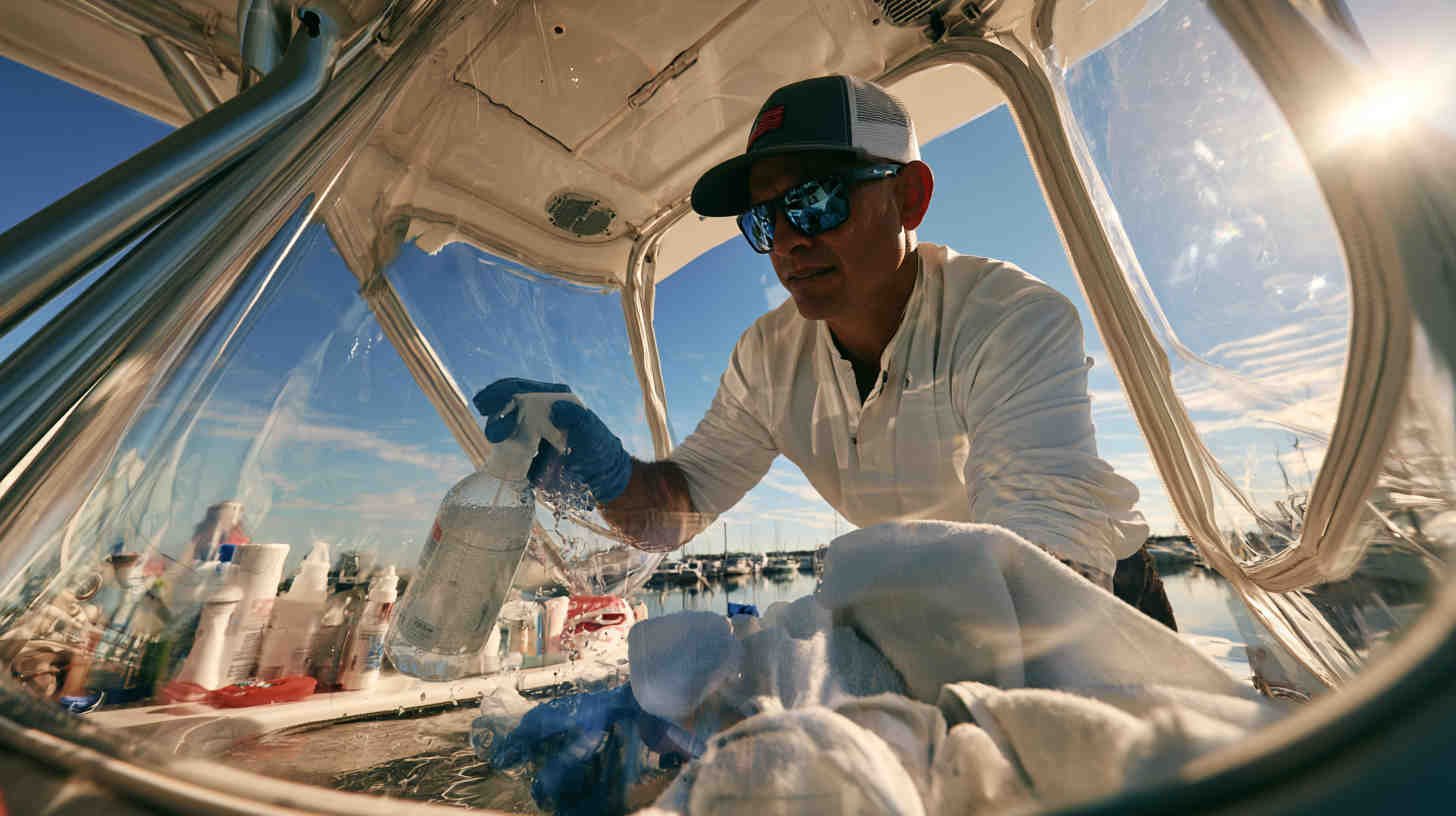
Once loose debris has been removed, use a cleaner that is specifically suitable for isinglass, clear vinyl, or marine plastic windows.
A small amount of mild soap diluted in clean water can be appropriate for routine cleaning, provided it is compatible with the window material. Avoid harsh detergents, abrasive cleaners, solvents, ammonia-based products, and anything containing strong chemicals unless the window manufacturer specifically approves it.
The cleaner should help loosen dirt rather than require vigorous scrubbing.
Apply the cleaning solution gently. There is no need to press hard against the panel.
3. Choose the Right Cleaning Cloth
The cloth you use can make just as much difference as the cleaning solution.
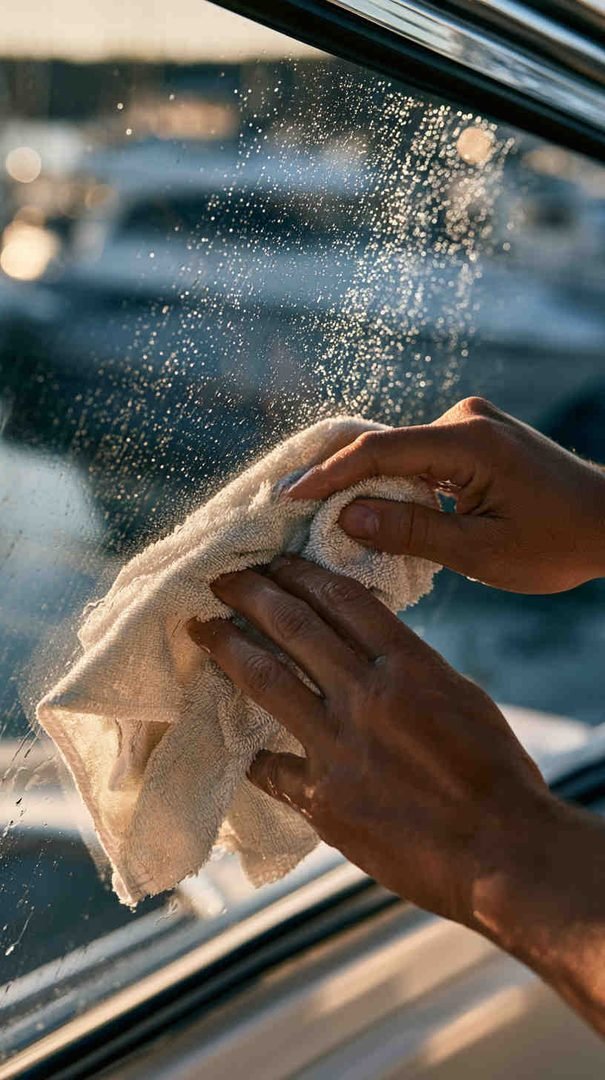
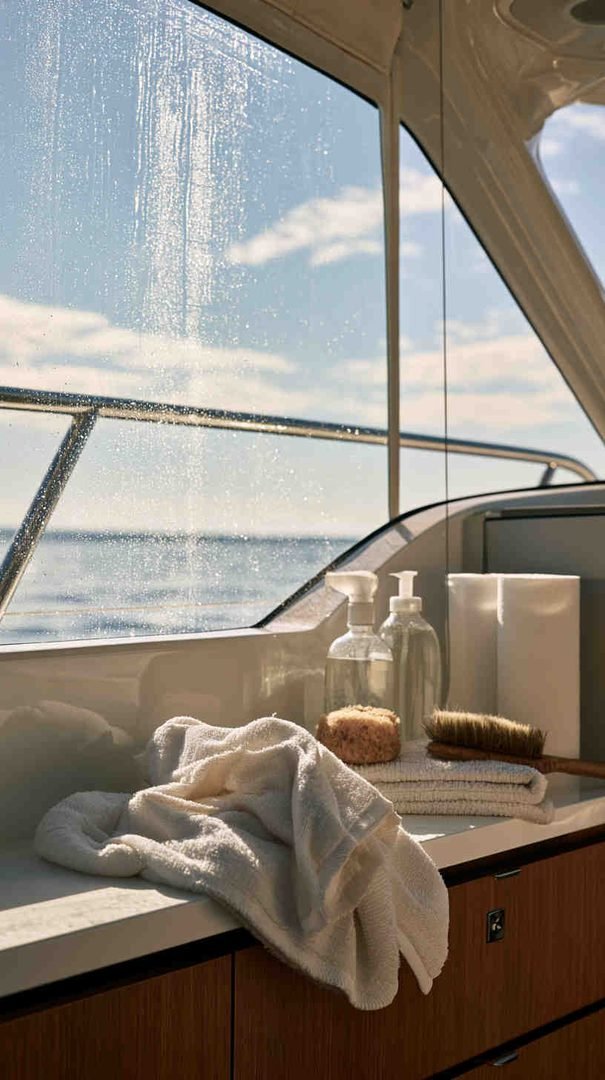
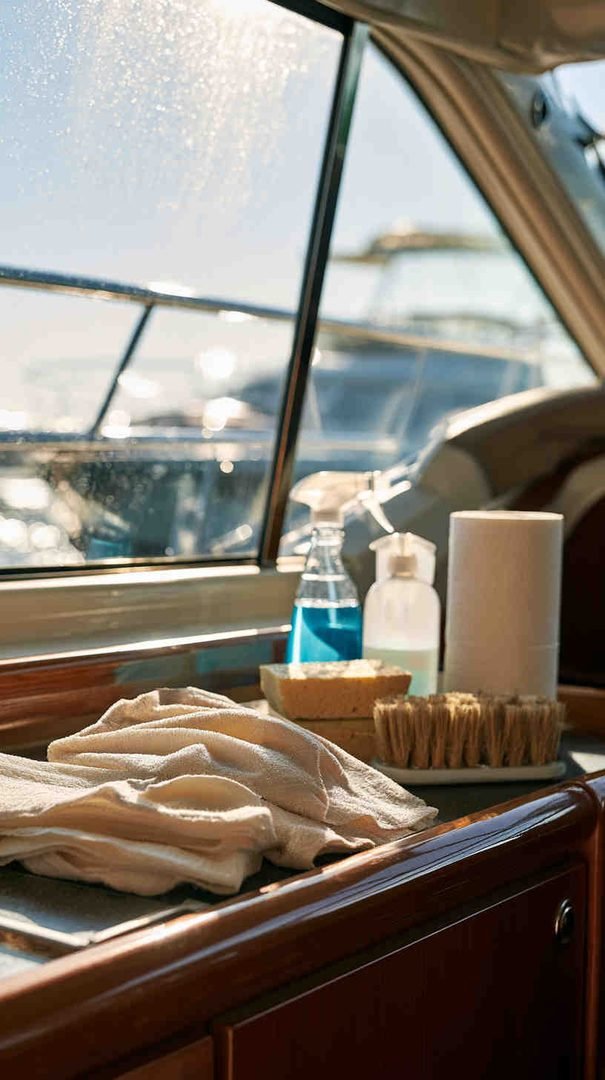
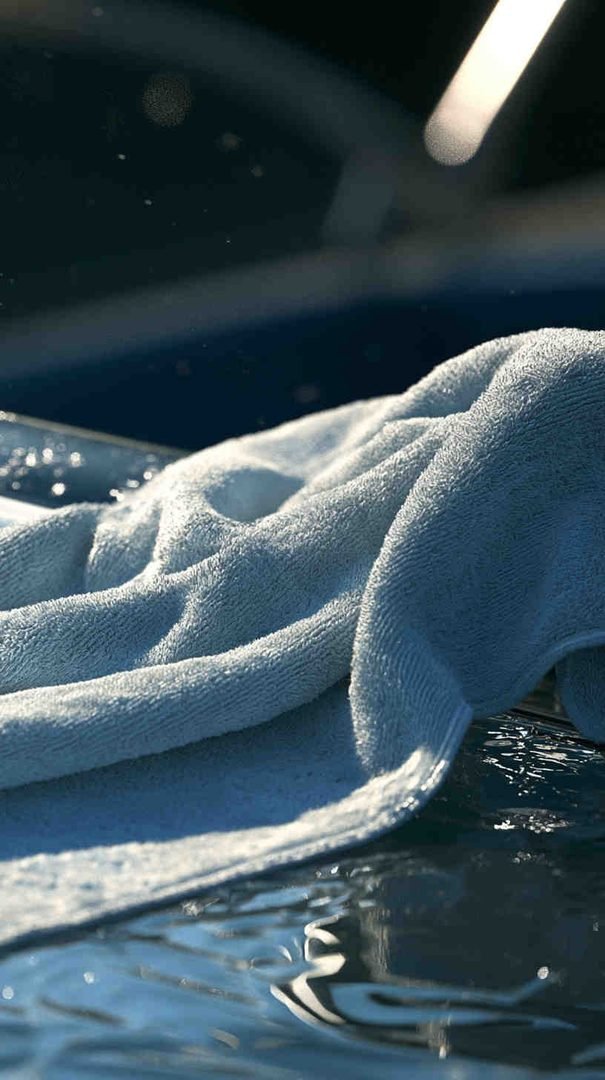
A soft, clean microfiber cloth is generally a better choice than rough towels, paper towels, sponges with abrasive surfaces, or old rags that may contain trapped dirt.
Most importantly, make sure the cloth itself is clean.
A microfiber cloth that was previously used to wipe a dusty deck, windshield, or dirty boat surface may contain tiny particles capable of scratching isinglass.
Cleaning idea: Keep dedicated isinglass towels
Consider keeping separate, clean microfiber cloths specifically for your clear boat windows. Store them in a clean container or bag so they do not collect dust, sand, or other debris between cleanings.
4. Never Dry-Wipe Isinglass
One of the easiest ways to scratch clear vinyl is dry wiping.
If you notice fingerprints, dust, or a small spot on the window, resist the temptation to grab a dry cloth and polish it away. Even tiny particles can cause microscopic scratches when rubbed across the surface.
Instead, rinse the area with clean water first and then gently clean it.
This is particularly important after boating in coastal areas, where salt particles can remain on the windows even when they are difficult to see.
5. Clean With Gentle, Straight Motions
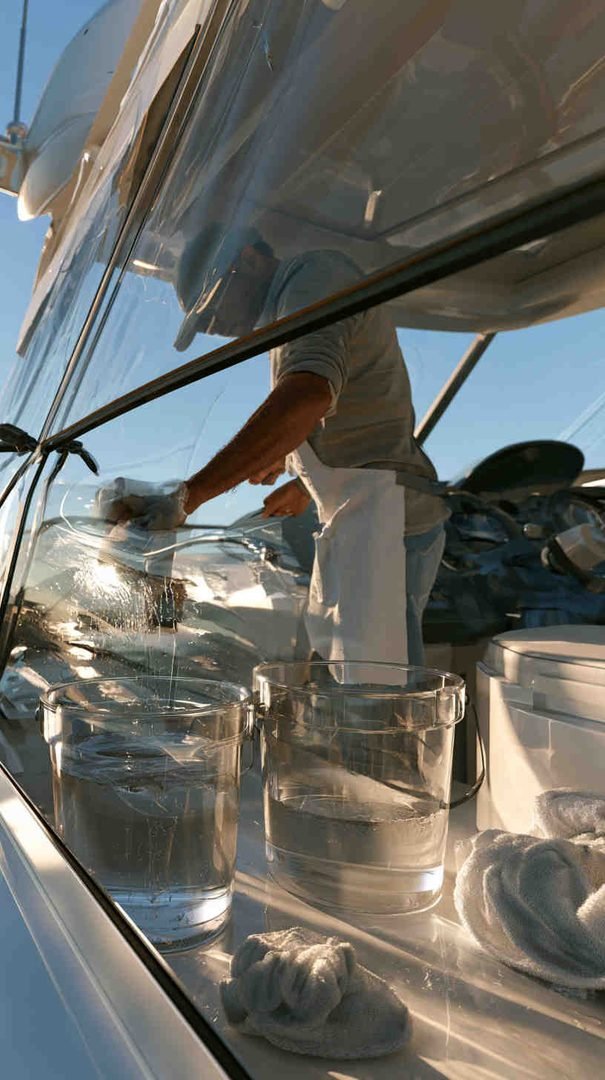

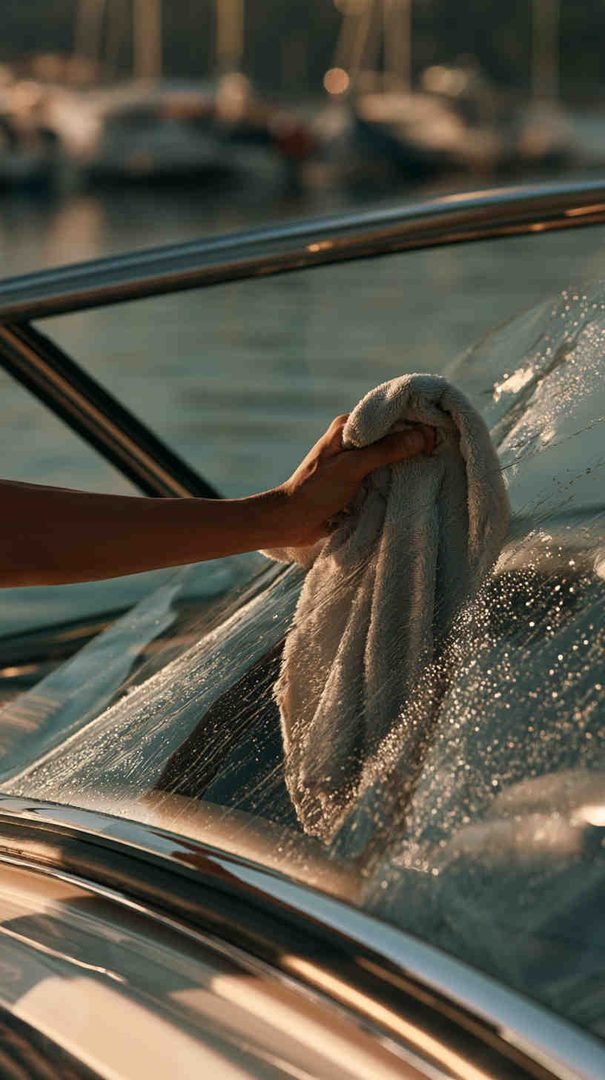


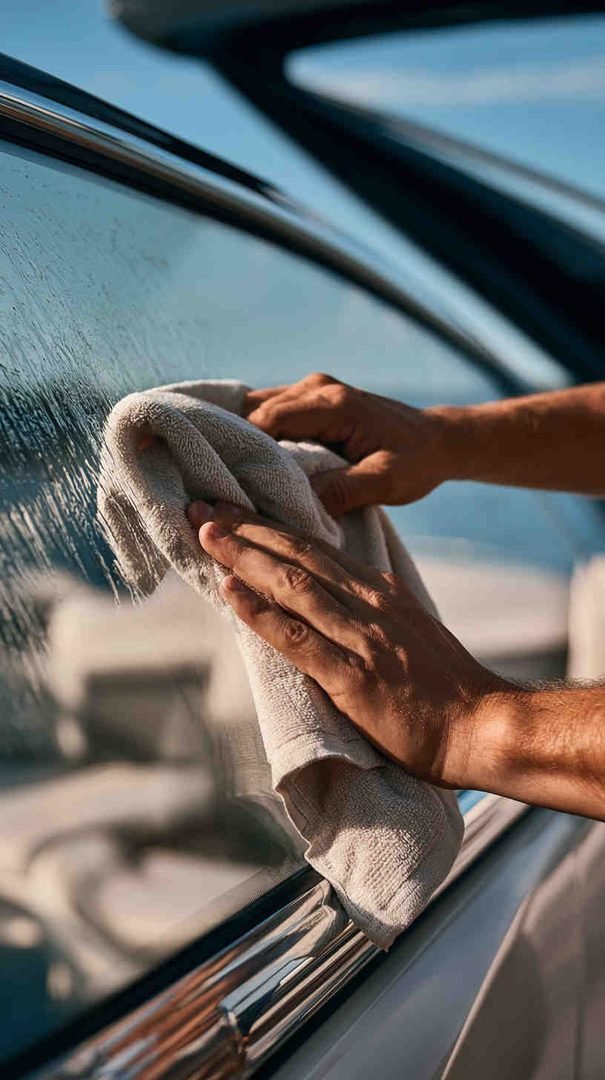
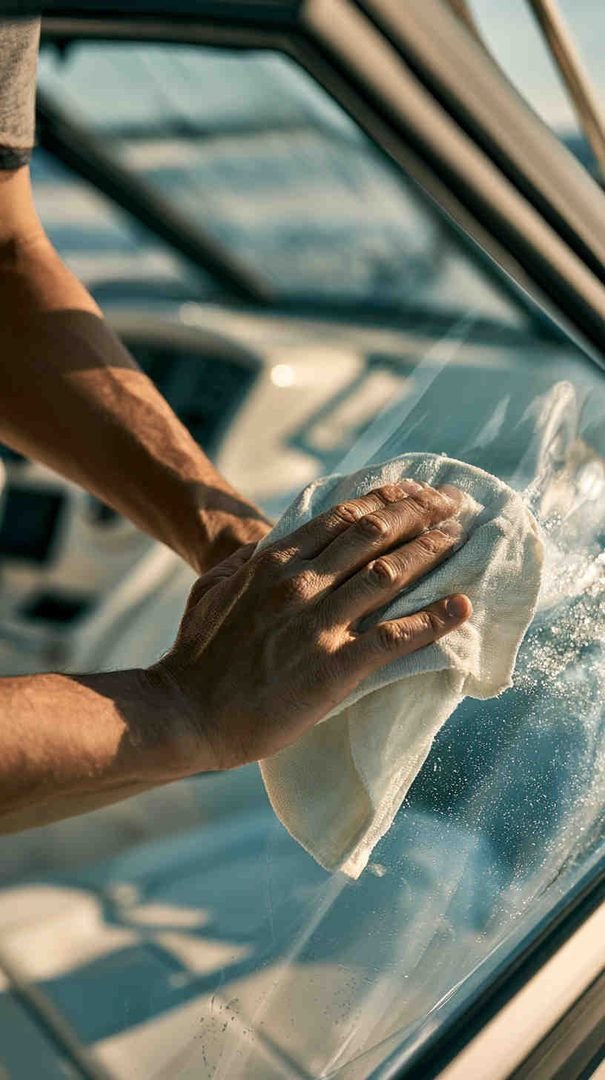
When washing the panel, use light pressure and gentle movements.
There is generally no benefit to aggressively scrubbing in circles. If dirt does not come off easily, add more cleaning solution or rinse the surface again rather than increasing pressure.
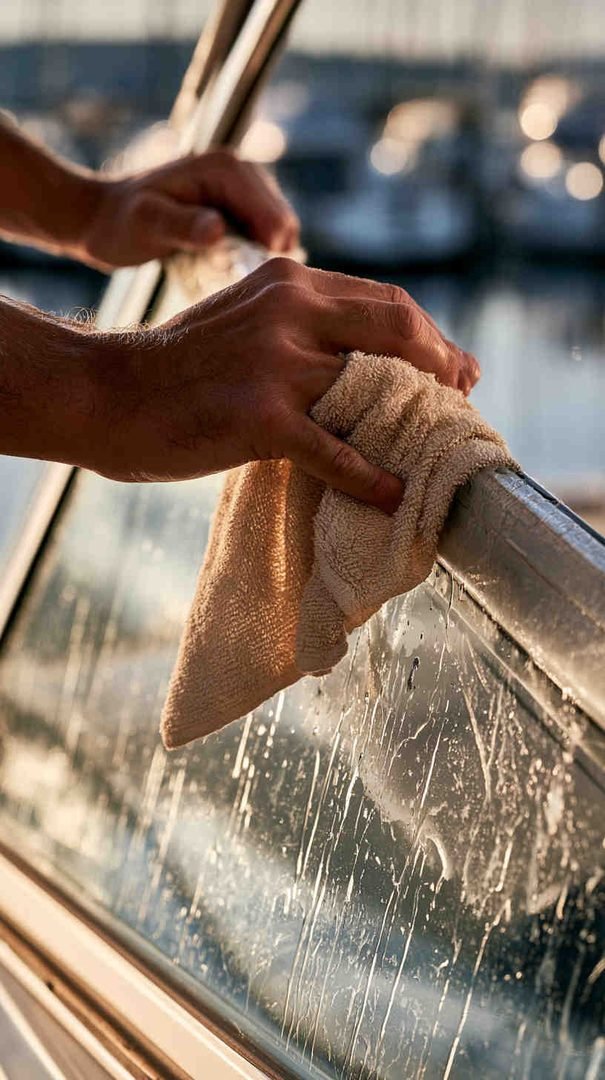
Work in manageable sections from top to bottom. This helps prevent dirty water from running over areas you have already cleaned.
After washing, rinse the entire surface thoroughly to remove remaining soap and loosened debris.
6. Dry the Windows Carefully
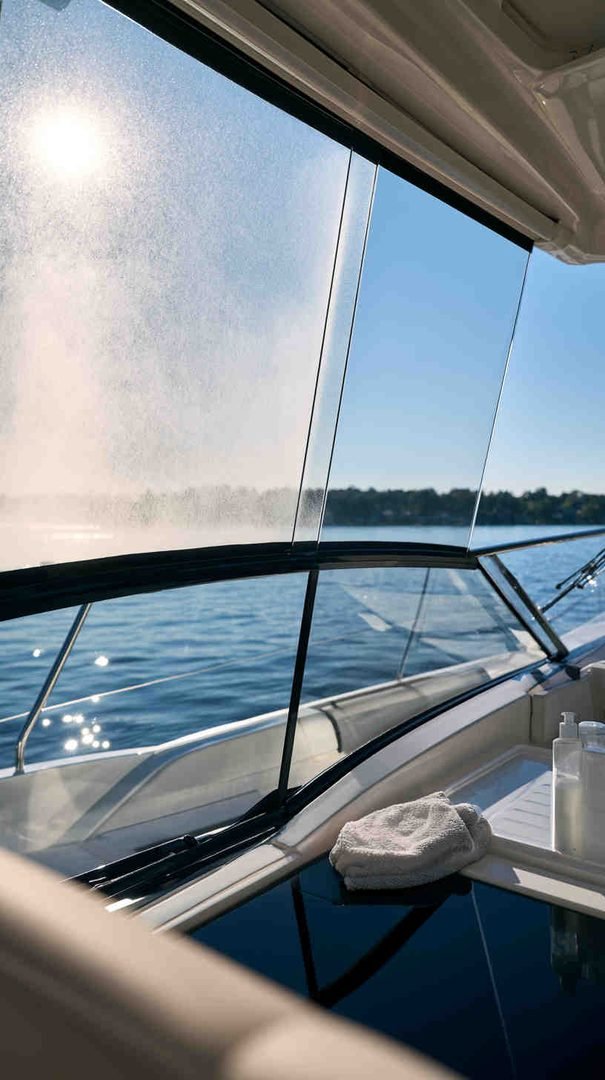
Leaving water to air-dry can result in water spots, particularly when using hard or mineral-rich water.
However, drying is another stage where scratches can occur.
Use a clean, soft microfiber cloth and gently blot or lightly wipe the surface. Do not press hard. Make sure the drying cloth is completely free of grit.
Some boat owners prefer to let most of the water drain away before gently drying the remaining moisture. This reduces the amount of rubbing required.
7. Deal With Stubborn Salt and Water Spots Carefully
Salt deposits and water spots can become difficult to remove when they are allowed to dry repeatedly.
The wrong response is to scrub harder.
Instead, wet the affected area thoroughly and allow the deposits to soften. You can then gently clean the area with an appropriate mild cleaner and a soft cloth.
For stubborn deposits, repeat the process rather than increasing pressure.
Cleaning idea: Clean after saltwater trips
If your boat spends time in saltwater, rinsing the isinglass with fresh water after each outing can prevent salt deposits from accumulating. Regular light cleaning is much safer than trying to remove heavy buildup later.
8. Avoid Common Products That Can Damage Isinglass
Not every household cleaning product belongs on a boat’s clear vinyl windows.
Avoid abrasive powders, rough scrubbing pads, stiff brushes, strong solvents, and unapproved chemical cleaners. Paper towels can also be problematic because repeated wiping may create fine marks and leave lint behind.

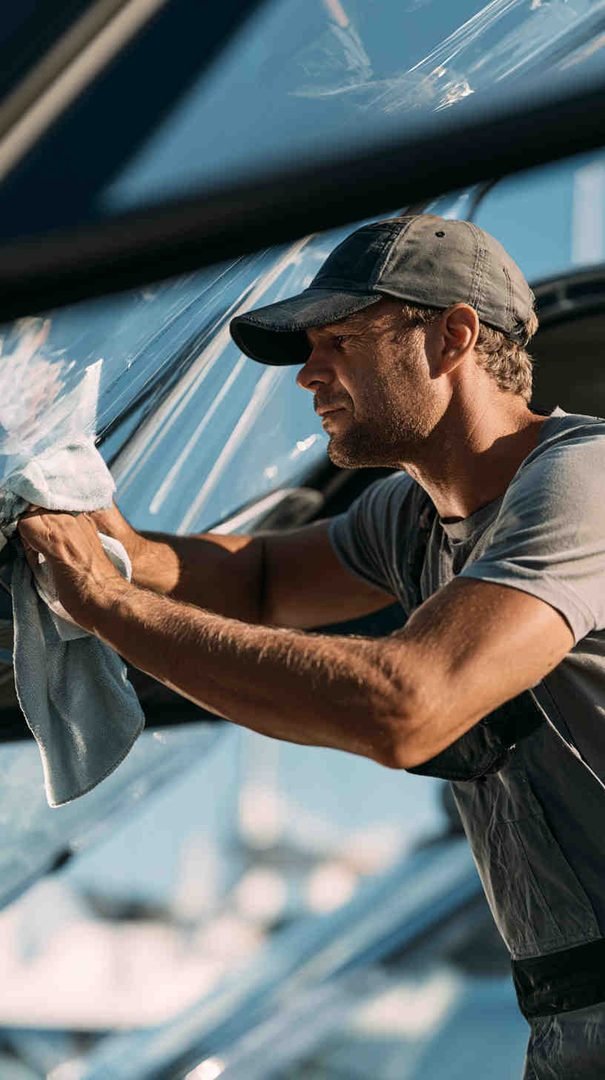
Products containing ammonia or other harsh ingredients should not be used unless the manufacturer of your specific isinglass material confirms that they are safe.
When in doubt, check the care instructions supplied with the enclosure or window material.
9. Do Not Fold or Store Dirty Isinglass
Cleaning is only part of protecting isinglass.
Storage matters too.
If a clear vinyl panel is folded or rolled while it still has dirt or salt on its surface, those particles can become trapped against the material. Movement and pressure can then create scratches or permanent-looking marks.
Before storing removable isinglass panels, clean and rinse them thoroughly. Allow them to dry appropriately and follow the manufacturer’s recommended storage method.
Avoid placing heavy objects on top of stored panels.
10. Protect the Surface After Cleaning
Once the window is clean, an appropriate protective product designed specifically for clear marine vinyl can help maintain its appearance. Protection can make future cleaning easier and may help reduce the effects of UV exposure and environmental contamination.
However, not every polish or protectant is suitable for every type of isinglass. Always verify compatibility with the material before applying anything to the surface.
A small test area in an inconspicuous location is a sensible precaution when using a new product.
How Often Should You Clean Isinglass Windows?
There is no single schedule that works for every boat.
Cleaning frequency depends on how often the boat is used, whether it operates in saltwater, exposure to dust and pollution, weather conditions, and how the boat is stored.
For boats frequently exposed to saltwater, a simple fresh-water rinse after use can be extremely beneficial. A more thorough cleaning can be performed when the panels become visibly dirty.
The important principle is regular gentle maintenance rather than occasional aggressive cleaning.
What to Do If Your Isinglass Is Already Scratched
If your isinglass already has scratches, avoid trying to remove them by aggressive polishing or abrasive compounds.
Some very fine surface imperfections may be improved using products specifically formulated for the particular type of clear vinyl, but deeper scratches can be difficult or impossible to completely remove.
This is why prevention is so important.


Once a scratch is created, repeatedly rubbing the area harder usually makes the situation worse. If the material has severe scratching, cloudiness, cracking, or other damage, consult the enclosure manufacturer or a marine upholstery professional about appropriate restoration or replacement.
A Simple Isinglass Cleaning Routine
For everyday maintenance, the process can be kept simple:
- Rinse the window thoroughly with fresh water.
- Remove loose salt, sand, and dirt without rubbing.
- Apply a mild, material-compatible cleaner.
- Use a clean, soft microfiber cloth.
- Wipe gently with minimal pressure.
- Rinse away all remaining cleaner.
- Gently dry using another clean microfiber cloth.
- Inspect the panel for remaining spots or debris.
- Apply a compatible protective product if recommended.
- Store the panels clean and protected when they are not being used.
Final Thoughts
Learning how to clean isinglass windows without scratching them is mostly about changing the way you approach the job. The material does not need aggressive scrubbing or complicated cleaning techniques. It needs plenty of clean water, appropriate cleaning products, soft materials, and gentle handling.
The most important rule is simple: never rub dirt, sand, or salt across a dry isinglass surface. Rinse first, use a clean cloth, work gently, and avoid harsh chemicals and abrasive tools.
With consistent care, your boat’s isinglass windows can remain clear, attractive, and useful for much longer. Regular rinsing and gentle cleaning are far better than waiting until the panels become heavily stained and then trying to restore them with aggressive methods.
Happy Boating!
Share Cleaning isinglass windows without scratching them for good with your friends and leave a comment below with your thoughts.
Read A realistic maintenance schedule for boats used once a month until we meet in the next article.