Why Ballast Water must be Treated
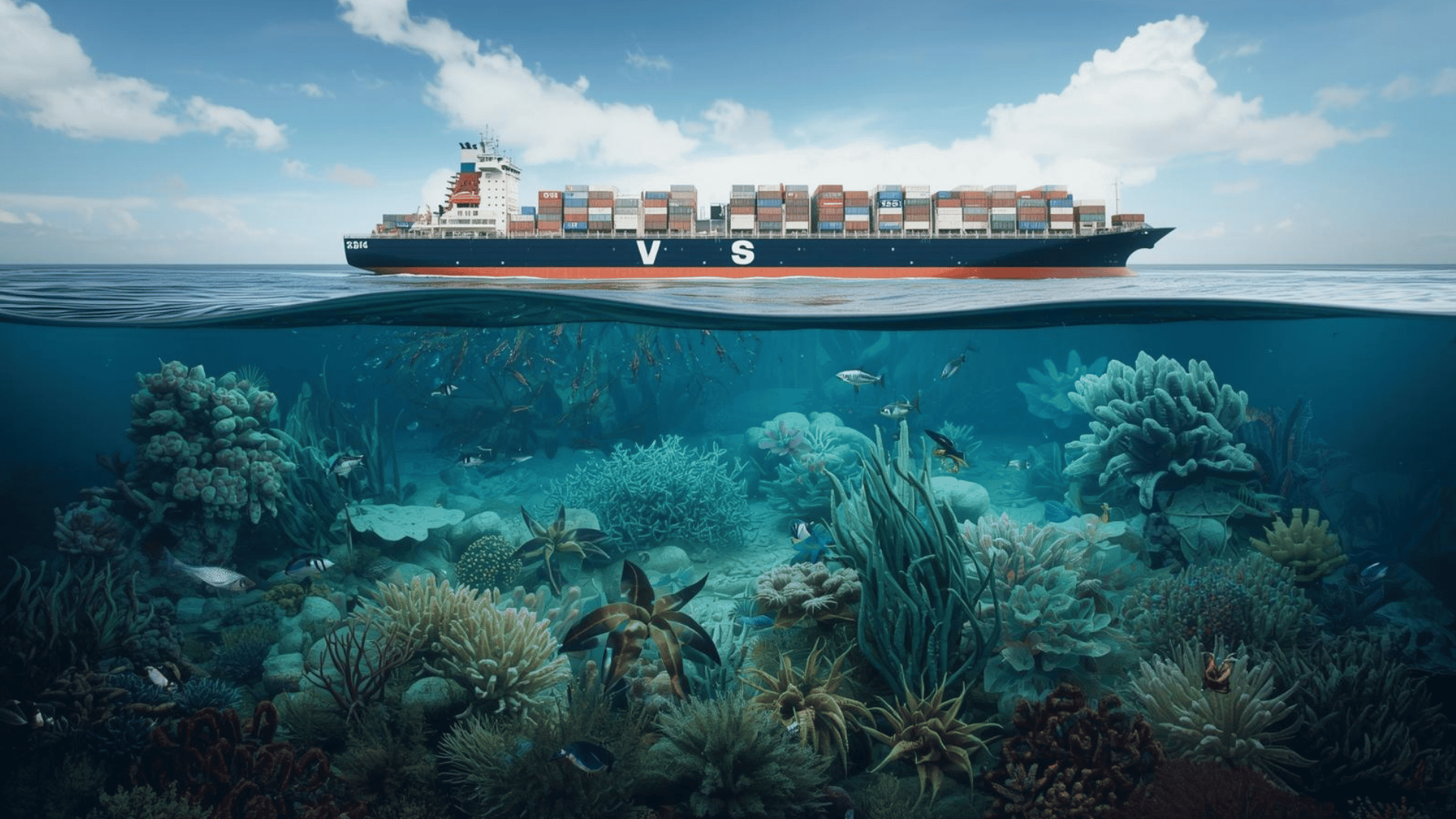
Ships carry ballast water to maintain stability, structural integrity, and proper trim during voyages — especially when sailing without cargo or with a partial load. The problem is that this water is drawn from one port’s coastal ecosystem and discharged thousands of miles away in an entirely different one. Along with that water come living organisms: bacteria, larvae, algae, invertebrates, and pathogens that evolved in entirely different environmental conditions. When discharged into a new ecosystem, these organisms can become invasive species with devastating and often irreversible consequences.
The International Maritime Organization (IMO) considers the uncontrolled discharge of ballast water one of the greatest threats to the world’s marine ecosystems. Shipping moves more than 80% of global trade, and vessels transfer an estimated 3 to 5 billion tonnes of ballast water internationally every year. A comparable volume is also transferred domestically within countries and coastal regions. The sheer scale of this movement makes ballast water management a global environmental priority.
The Ecological and Economic Damage of Invasive Species
Once an invasive species establishes itself in a new marine environment, eradicating it is virtually impossible. The ecological disruption cascades through food webs, affecting fisheries, aquaculture, tourism, and biodiversity. Several documented cases illustrate the scale of harm.
The comb jelly Mnemiopsis leidyi, introduced to the Black and Azov Seas through ballast water, decimated the anchovy and sprat fisheries and caused losses estimated at around USD 200 million annually. The species has since spread to the Caspian Sea and raised concern in the Baltic. The Northern Pacific Starfish (Asterias amurensis) was introduced to Australian waters via ballast water from Japan, causing severe damage to aquaculture and fishing industries that proved impossible to reverse, with ongoing annual losses running into millions of dollars.
In North America, costs related to damage and control of the Zebra Mussel (Dreissena polymorpha) and Quagga Mussel have been estimated at over USD 1 billion per year. These mussels clog water intake pipes, foul boat hulls, and disrupt native ecosystems. Asian Carp have invaded the Mississippi and Illinois rivers, and in some stretches of the Illinois River they constitute an estimated 75% of all fish biomass — directly threatening the Great Lakes fishing industry.
The threat extends beyond aquatic ecology. Vibrio cholerae, the bacterium responsible for cholera, can be transmitted through ballast water discharge near coastal tourism areas and beaches. E. coli strains carried in ballast water pose serious public health risks. Asian Kelp (Undaria pinnatifida) spreads rapidly through spore dispersal, displacing native algae, altering habitat structure, and threatening commercial shellfish operations through habitat competition.—
The IMO BWM Convention
To address this global threat, the IMO adopted the International Convention for the Control and Management of Ships’ Ballast Water and Sediments (BWM Convention). The convention’s purpose is to minimise the risk of transplanting harmful aquatic organisms and pathogens through ballast water and associated sediments.
Ships must comply with one of two compliance standards: D-1 or D-2. Both are legally binding under the convention.
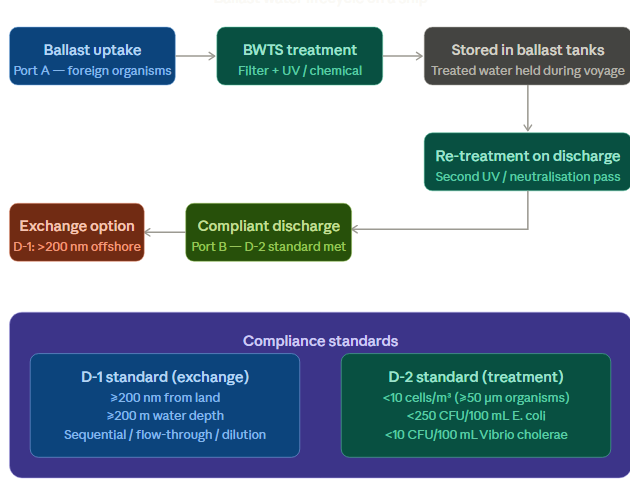
D-1 Standard — Ballast Water Exchange requires that exchange be conducted at least 200 nautical miles from the nearest land in water at least 200 metres deep. Where this is not possible due to navigational or weather constraints, the vessel must conduct the exchange at minimum 50 nautical miles from land in water at least 200 metres deep, or in a designated area approved by the port state authority. Three methods are accepted: sequential (empty and refill), flow-through (pumping water through the full tank), and dilution (pumping clean water in while simultaneously discharging).
D-2 Standard — Ballast Water Performance Standard is the more stringent requirement that mandates treatment to specific biological discharge limits before water can be released.
D-2 Discharge Limits
Any approved Ballast Water Treatment System (BWTS) must ensure the discharged water meets the following maximum concentrations:
| Organism category | Discharge limit |
|---|---|
| Viable organisms ≥ 50 µm (plankton) | < 10 cells / m³ |
| Viable organisms 10–50 µm | < 10 cells / mL |
| Toxicogenic Vibrio cholerae | < 10 CFU / 100 mL |
| Escherichia coli | < 250 CFU / 100 mL |
| Intestinal Enterococci | < 100 CFU / 100 mL |
A BWTS must hold a type approval certificate issued by the flag state administration. Ships complying only with D-2 cannot conduct ballast water exchange — they are restricted to using their approved treatment system for all ballast operations. Ships complying with both D-1 and D-2 may use either method depending on circumstances. Limited exceptions exist for emergency situations, accidental discharge, or cases where the safety of the vessel would otherwise be compromised.
How Ballast Water Treatment Systems Work
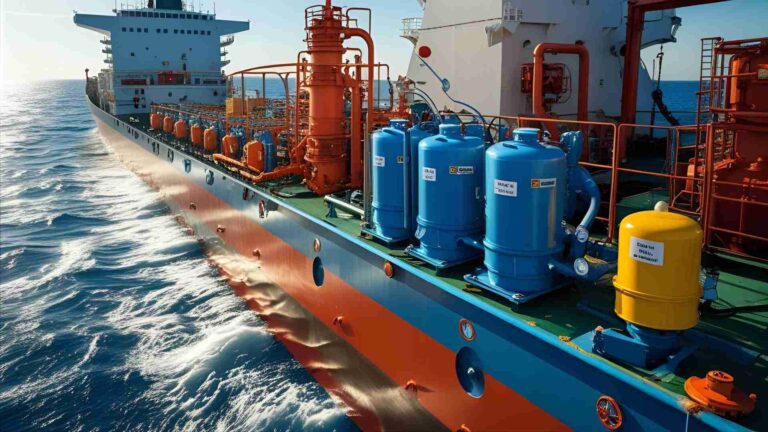
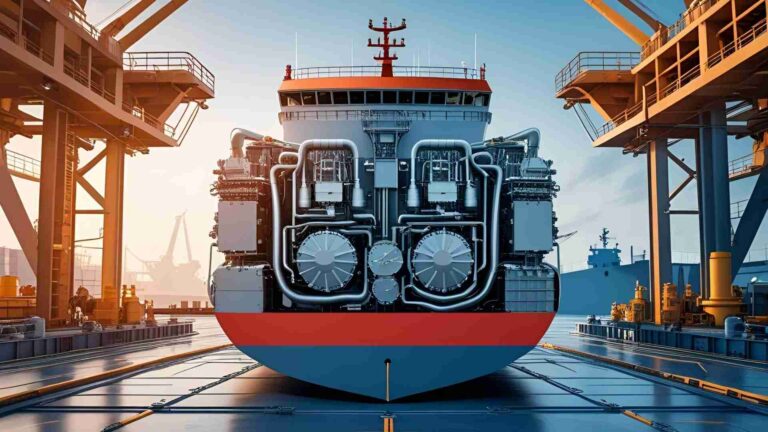
Most BWTS installations combine physical filtration with a secondary disinfection process. Filtration alone cannot meet D-2 limits but significantly reduces the biological load entering the treatment system and prevents sediment accumulation in ballast tanks.
Seven treatment technologies are used commercially:
- UV irradiation systems
- Chemical dosing (electrolysis, chlorination, biocides)
- Ultrasonic / cavitation treatment
- Magnetic field treatment
- Deoxygenation
- Heat treatment
- Electric pulse and pulse plasma treatment
The UV system is by far the most widely deployed and operationally proven technology in the global fleet. It works in two stages: on uptake, water passes through a fine filter to remove larger organisms and sediment, then through UV lamps that damage the DNA of microorganisms, rendering them non-viable. On discharge, a second UV treatment pass ensures compliance before water is released into the port environment. Chemical treatment — typically using sodium hypochlorite generated by electrolysis of seawater — is the second most common approach, followed by ultrasonic systems. Chemical systems often require a neutralisation step on discharge to prevent residual oxidants from entering the receiving environment.
Real-World Operational Challenges
The regulations are technically sound in principle, but their practical implementation aboard vessels presents challenges that the regulatory framework does not always account for. Chief officers and ballast water management officers — the crew members directly responsible for compliance — face conditions that are often outside their control.
One of the most significant is water quality at the port of uptake. In turbid or silty ports — common across South and Southeast Asia, parts of Africa, and river terminals — the incoming water carries extremely high suspended sediment loads. The BWTS filter rapidly clogs under these conditions. In severe cases, filter elements sustain physical damage. The options are few: slow the ballasting rate (which delays cargo operations and generates commercial pressure from charterers and port agents), or push through the clog and risk equipment failure. Neither is a comfortable position when a Port State Control inspection follows in the next port.
Breakdowns of BWTS equipment mid-voyage also create compliance dilemmas. If a system fails at sea and cannot be repaired before arrival, the vessel must report to the port state authority, request an exemption, and document the equipment failure — a process that can affect the vessel’s PSC record and delay cargo operations.
The convention’s provisions focus heavily on what ships must do. What is less clearly addressed is accountability on the port state side — particularly the quality of receiving waters that ships are compelled to discharge into, and the turbidity of port waters from which ballast must be taken. The mismatch between regulatory expectation and operational reality at difficult ports remains an ongoing concern among ship operators and seafarers.
Compliance Pathways and What Ships Must Do
For ships built after the convention’s entry into force, a BWTS complying with D-2 must be fitted at the time of construction. Existing vessels were required to retrofit a BWTS according to a phased schedule tied to their IOPP renewal survey date. The type-approved BWTS must be listed on the ship’s Ballast Water Management Plan, and all ballast operations must be logged in the Ballast Water Record Book.
Port State Control officers inspect these records and may conduct biological sampling of ballast water during PSC inspections. Non-compliance can result in detention, fines, and in some jurisdictions, criminal liability for the master or officer in charge. Several US ports — governed by the US Coast Guard’s own ballast water regulations, which in some respects are stricter than the IMO convention — have prosecuted cases of non-compliance.
The Irreversibility Principle
What makes ballast water management so critical — and why the convention demands treatment rather than just exchange in the long term — is irreversibility. Unlike pollution from an oil spill, which degrades over time, a successfully established invasive species cannot be removed from an ecosystem. Once Mnemiopsis leidyi became established in the Caspian Sea, no intervention reversed the collapse of the fisheries it affected. Once Zebra Mussels colonised the Great Lakes system, they became a permanent fixture requiring perpetual, expensive management.
This is why the BWM Convention treats ballast water discharge not as a routine operational matter but as a regulated environmental activity requiring active management, documentation, and accountability — on a par with the handling of oily water or sewage discharge. The cost of building and retrofitting treatment systems across the global fleet is measured in billions of dollars. But that figure is small against the cumulative, compounding economic and ecological cost of unmanaged biological invasions across the world’s coastal waters.
Ballast water treatment is not a paperwork exercise — it is one of the few maritime regulations where the direct link between ship operations and irreversible ecological harm is unambiguous and scientifically well-documented. Proper implementation, robust equipment, and realistic port-side conditions all have a role to play in making the convention effective in practice.
Happy Boating!
Share Why Ballast Water must be Treated with your friends and leave a comment below with your thoughts.
Read The Essential Guide to Bow Thruster On Ships until we meet in the next article.