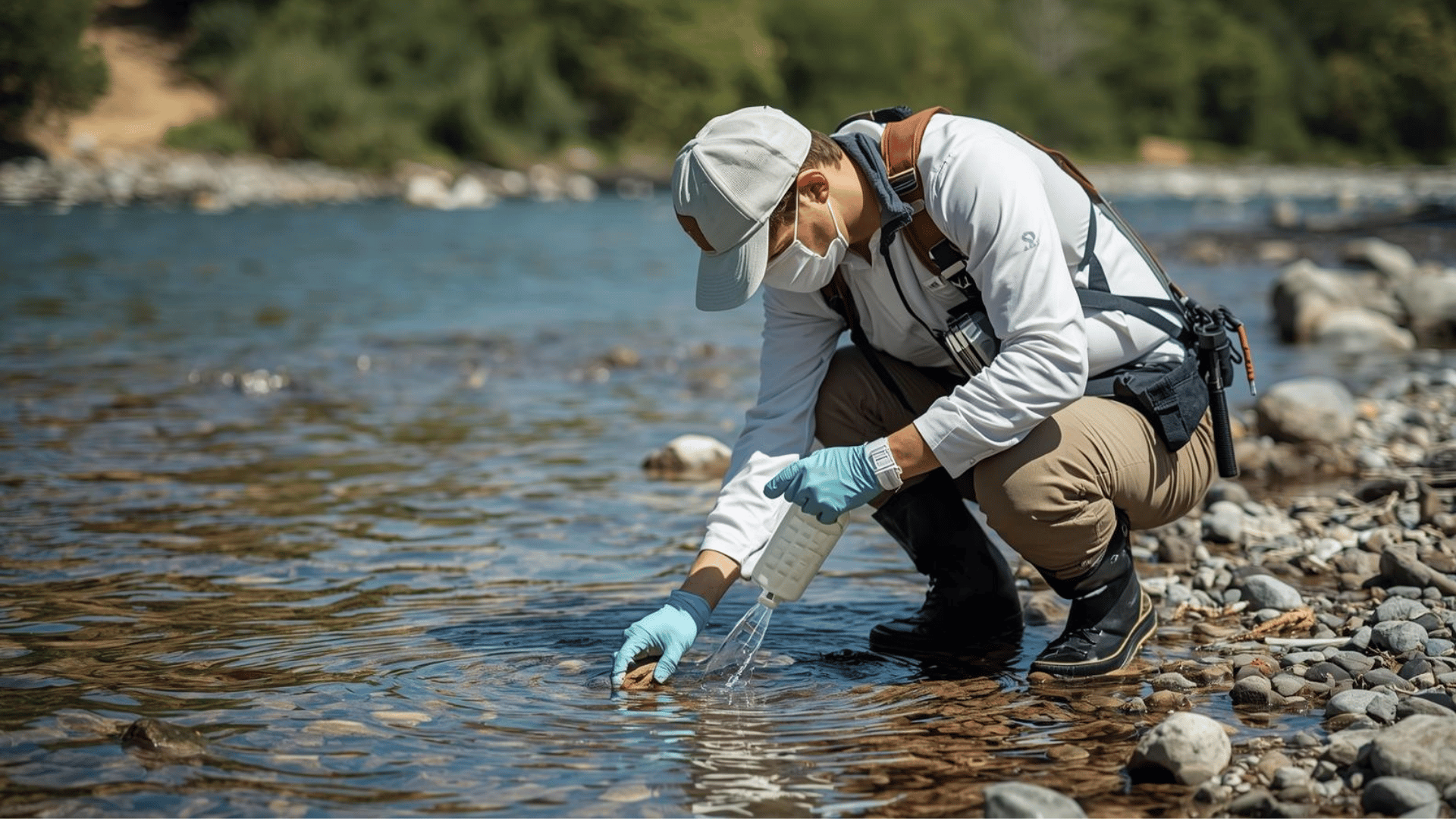
Water Sampling? The Crew Can Do It Themselves Now
For fleet owners and shipowners, regulatory compliance around onboard water is a constant operational challenge. Ships carry several distinct types of water — ballast water, potable water, scrubber water, grey water, and black water — each governed by its own set of international and regional regulations. Staying compliant traditionally required scheduling a specialist to board the vessel, an arrangement that is expensive, logistically difficult, and often impractical given the unpredictable movements of commercial shipping.
Normec MTS (Maritime Testing Services), an independent testing agency accredited by the Dutch Accreditation Council, has developed a solution that turns this model on its head: practical, pre-configured sample kits that allow the ship’s own crew to collect water samples themselves, which are then analysed in Normec MTS’s accredited laboratories.
Why Onboard Water Testing Matters
Before examining how crew-led sampling works, it is worth understanding what is actually at stake. Onboard water testing serves three distinct purposes: safeguarding crew health, protecting the marine environment, and maintaining regulatory compliance.
| Water Type | Health Risk | Environmental Risk | Key Regulations |
|---|---|---|---|
| Potable water | Legionella, E. coli, coliforms | — | MLC 2006, WHO Ship Sanitation Guide |
| Ballast water | — | Invasive species, microbial transfer | IMO D-2 standard |
| Scrubber water | — | Discharge contamination | VGP (US), MARPOL |
| Sewage (black water) | — | Marine pollution | MARPOL Annex IV |
| Grey water | — | Marine pollution | IMO, MARPOL |
Improperly managed water is a well-established route for infectious disease on ships. A review of over 100 disease outbreaks associated with vessels found that a significant proportion was attributed to waterborne transmission. The Maritime Labour Convention (MLC) 2006 specifically requires member states to implement standards for drinking water quality, and the WHO’s Guide to Ship Sanitation places responsibility squarely on ship operators to monitor their water systems for microbial and chemical indicators.
On the environmental side, every vessel calling at a US port must comply with the Vessel General Permit (VGP), administered by the Environmental Protection Agency. Ballast water systems must meet the IMO D-2 standard, which sets strict limits on the concentration of living organisms in ballast discharge. Failure to demonstrate compliance means ships can be turned away from port.
The Traditional Approach and Its Limitations
Until recently, the standard method for water testing compliance involved arranging for a qualified technician to travel to wherever the ship was berthed and conduct sampling in person. Hans van der Wart, Director of Normec MTS, describes the problem plainly: scheduling is always last-minute, the costs of sending someone aboard are significant, and there are not always qualified personnel available to make the visit.
For vessels operating globally — calling at multiple ports across different time zones and jurisdictions within a single voyage — arranging an onboard visit each time a sample is required is simply not practical.
Crew-Led Sampling: How It Works
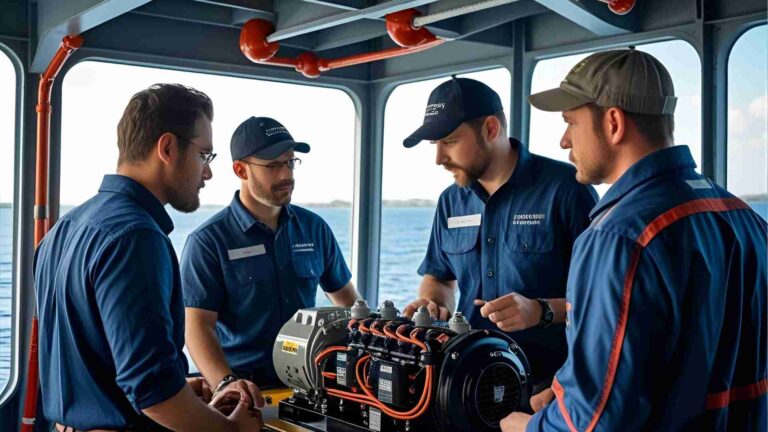
The Normec MTS approach replaces the onboard technician with a carefully designed sample kit and a detailed manual. Legislation, as van der Wart notes, does not prohibit crew members from taking the samples themselves — it only requires that the analysis be carried out by an accredited laboratory, which Normec MTS provides.
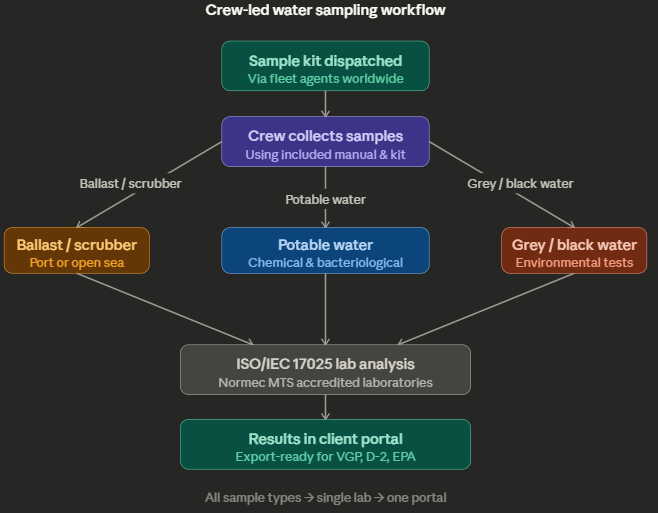
The workflow is straightforward. Normec MTS ships the kits worldwide through fleet agents, who store them in warehouses and forward them with regular supply shipments to the vessels. If a kit is needed urgently, delivery to anywhere in the world is achievable within a few days.
Once onboard, crew members follow the included instructions to collect samples at the appropriate time and location:
- Ballast water samples are taken in port, when the treatment system is operating under its design conditions.
- Scrubber water samples must be taken at sea, when the main engine is running at full power — capturing the three mandatory annual samples per ship (inlet, outlet, and overboard discharge).
- Potable water, grey water, and black water each have dedicated kits for their respective test requirements.
The sealed samples are then sent to Normec MTS’s laboratory network, where analysis is conducted under NEN-EN-ISO/IEC 17025:2017 accreditation — the international standard for testing laboratory competence.
What Each Kit Tests
Potable Water Kits
Potable water kits come in several configurations, ranging from a standard kit focused on bacteria and chlorine to a comprehensive full kit covering additional parameters. The table below summarises the main options available for shipboard potable water testing:
| Parameter | Standard Kit | Full Kit | Chlorine-Only Kit | Bacteria-Only Kit |
|---|---|---|---|---|
| Free & total chlorine (0–1 ppm) | ✓ | ✓ | ✓ | — |
| Chlorine LR (0–5 ppm) | ✓ | ✓ | ✓ | — |
| Chlorine HR (0–250 ppm) | ✓ | ✓ | ✓ | — |
| pH (4–11) | ✓ | ✓ | — | — |
| HPC aerobic bacteria (0–1,400 CFU/ml) | ✓ | ✓ | — | ✓ |
| Coliforms / E. coli (1 CFU/100ml) | ✓ | ✓ | — | ✓ |
| Enterococci (1 CFU/100ml) | — | ✓ | — | — |
| Copper (0–1 ppm) | — | ✓ | — | — |
| Iron (0–10 ppm) | — | ✓ | — | — |
| Turbidity (5–500 JTU) | — | ✓ | — | — |
| Digital incubator included | ✓ | ✓ | — | ✓ |
The digital incubator is a critical component. Bacteriological testing requires samples to be held at a precise, stable temperature during incubation. The portable incubator included with the kits maintains lab-grade conditions in the field, with a digitally adjustable temperature, real-time display, and operating range from ambient +5°C up to 40°C. Its compact dimensions (215 × 161 × 170mm, 3kg) make it practical for shipboard use.
Annual consumables packs are available separately for each kit configuration, covering replacement quantities of bacteria packs, coliform/E. coli packs, and comparator reagents.
Ballast Water Kits
The ballast water kit is developed specifically for treatment systems using active chlorine, UV irradiation, and filtration. It covers both chemical and microbiological testing to demonstrate compliance with the IMO D-2 standard. Normec MTS is an approved supplier for D-2 commissioning, meaning its test results are accepted for the ballast water treatment system approval process.
Scrubber Water Kits
Scrubber water kits address the three mandatory annual samples per ship. Results are formatted for straightforward regulatory reporting.
Manual vs Digital Testing: The Cost Comparison
Shipowners evaluating water testing options generally encounter two approaches: manual test kits and digital test kits. Both produce indicative results — confirming whether values fall within permitted ranges or signalling that a sample needs to be sent ashore for comprehensive certified analysis.
| Factor | Manual Test Kits | Digital Test Kits |
|---|---|---|
| Purchase cost | Lower | Slightly higher |
| Accuracy | Prone to operator interpretation | Numerical, unambiguous |
| Contamination risk | Higher (unstable conditions at sea) | Lower |
| Speed of results | Slower | Near-instant |
| Training required | Moderate | Minimal |
| False positive risk | Higher | Lower |
| Total cost (including delays) | Often higher | Lower |
Manual kits rely on colorimetric comparison and visual pH assessment — both of which are affected by lighting conditions and operator interpretation. On a moving vessel, accurate sampling also requires a steady hand, and contamination of samples is a frequent problem. False positives force samples to be sent ashore unnecessarily, creating delays and holding up the ship.
Digital instruments produce numerical readouts, eliminating the ambiguity and minimising the risk of erroneous results. The initial investment is marginally higher, but the total cost — accounting for time, labour, and the expense of unwarranted laboratory referrals — typically favours the digital approach.
Compliance Reporting: VGP and D-2 Made Simple
One of the most practically valuable aspects of the Normec MTS system is the client portal. All test reports for every vessel in a fleet are stored and accessible in one place. Data can be exported in formats ready for upload to the EPA’s Central Data Exchange — the platform through which ships must submit VGP compliance data before entering US territorial waters. What previously required manual data entry and carried significant risk of transcription errors can be completed in a few clicks.
For D-2 compliance, Normec MTS’s status as an approved supplier means its microbiological test results directly support the ballast water treatment system approval process, with no additional certification steps required.
Legionella Control: An Innovation in Progress
Beyond sampling, Normec MTS is developing an environmentally friendly approach to legionella control in onboard drinking water systems. The conventional method — chemical shock dosing — requires the ship to remain in port during treatment. The new system, currently in pilot trials, installs a high-frequency vibration unit immediately after the water maker, where it inhibits bacterial growth continuously without chemicals and without the ship needing to be stationary. If the pilot results hold, this would represent a significant reduction in both the operational disruption and environmental footprint of legionella management at sea.
Summary
Crew-led water sampling, supported by accredited laboratory analysis and a structured client portal, addresses a genuine inefficiency in maritime compliance. By eliminating the need for an onboard specialist visit, it reduces costs, removes scheduling friction, and gives fleet operators continuous, documented evidence of compliance across all regulated water types — delivered in formats that slot directly into VGP and D-2 reporting requirements.
For any vessel operating internationally, particularly those calling at US ports, the combination of practical sampling kits, digital testing instruments, and a centralised compliance portal represents a meaningful improvement over the traditional approach. The crew already knows the ship. Now they can handle the sampling too.
Happy Boating!
Share Water Sampling? The Crew Can Do It Themselves Now with your friends and leave a comment below with your thoughts.
Read Boiler Mountings: A Comprehensive List until we meet in the next article.