Training Generation “Z” in the Marine Industry
The marine industry, encompassing shipping, offshore operations, shipbuilding, and maritime logistics, faces a critical challenge: attracting, training, and retaining Generation Z workers. Born between the mid-1990s and early 2010s, Gen Z represents a digitally native cohort that brings fresh perspectives but demands innovative approaches to thrive in a traditionally demanding sector.
As older generations retire, the industry must adapt to Gen Z’s preferences for fast-paced, technology-integrated learning, meaningful mentorship, and environments that prioritize mental health and career progression. Failure to do so risks high turnover in an field where skilled labor is essential for safety, efficiency, and innovation.
This article explores proven strategies, training modalities, and coaching techniques tailored to Gen Z, drawing on industry insights to build a resilient workforce capable of navigating the complexities of modern maritime operations.
Understanding Generation Z in the Marine Workplace
Generation Z enters the marine industry with unique characteristics shaped by their upbringing in a hyper-connected world. Unlike previous generations, they measure success not just against peers or industry standards but through the lens of social media, where instant feedback and global comparisons dominate.
This external validation can lead to anxiety when facing real-world challenges, such as troubleshooting engine failures at sea or adapting to rigorous safety protocols. In the marine sector, where isolation during long voyages is common, Gen Z’s need for constant interaction and purpose becomes even more pronounced.
Gen Z values authenticity, rapid progression, and impact. They seek roles where their contributions align with broader goals like environmental sustainability in shipping or advancing autonomous vessel technologies. Research indicates that Gen Z prefers collaborative, flexible environments over hierarchical structures, making traditional marine training—often rigid and lecture-based—ineffective.
Instead, they excel in settings that allow skill-stretching across roles, from deck operations to data analytics on IoT-equipped ships. Employers must recognize that Gen Z’s impatience stems from a desire for efficiency, not entitlement; they want to add value immediately and expect clear pathways to leadership.
In the marine context, Gen Z’s digital fluency offers advantages. They quickly adapt to simulation software for navigation training or AI-driven predictive maintenance tools, reducing onboarding time. However, their limited exposure to analytical problem-solving—due to overly structured education—requires targeted coaching to build resilience. For instance, when encountering obstacles like equipment malfunctions, they may initially struggle without guidance, highlighting the need for safe spaces to learn from errors without judgment.
To retain them, marine companies must foster belonging through diverse teams and mental health support. High-stress environments, such as offshore rigs, can exacerbate isolation, so offering flexible schedules where possible and integrating wellness programs is crucial. Ultimately, understanding Gen Z means viewing them as assets who can drive the industry’s shift toward sustainability and automation, provided training aligns with their worldview.
Key Strategies for Training and Retaining Gen Z
Effective training in the marine industry begins with embracing Gen Z’s strengths as digital natives. Traditional methods, like lengthy classroom sessions on maritime regulations, often fail to engage them. Instead, integrate technology to create immersive experiences that accelerate learning and build practical skills.
Embrace Technology in Training
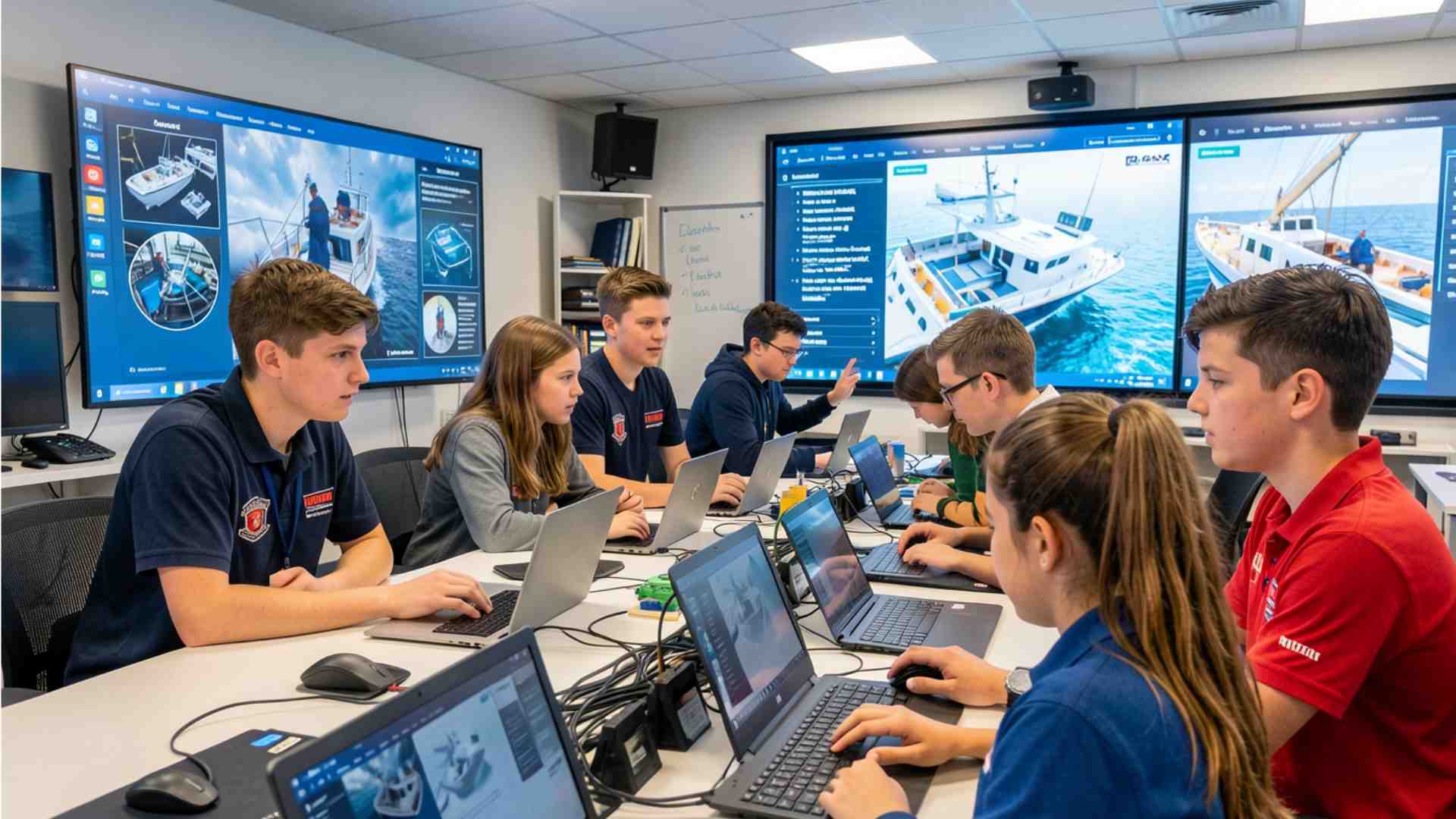
Gen Z thrives on digital tools, making virtual reality (VR), artificial intelligence (AI), and simulation platforms ideal for marine training. VR simulations allow trainees to practice emergency responses, such as fire suppression on a vessel, in a risk-free environment. This approach has proven to cut training time by up to 30% in maritime academies, as it enables repeated practice without real-world consequences. AI-powered apps can personalize learning, adapting modules to individual progress—for example, tailoring lessons on ballast water management based on a trainee’s quiz performance.
Simulation tools extend to onboard training, where augmented reality (AR) overlays can guide maintenance tasks on engines or navigation systems. Digital apps for tracking certifications ensure compliance with International Maritime Organization (IMO) standards while providing instant feedback. By leveraging these technologies, employers not only speed up skill acquisition but also appeal to Gen Z’s preference for interactive, tech-driven education.
Accelerated Learning and Cross-Training
Gen Z learns rapidly and prefers variety over specialization. In the marine industry, cross-training—rotating roles from cargo handling to environmental monitoring—builds adaptability, essential for a workforce facing automation. This method creates a flexible team capable of handling multifaceted operations, like managing hybrid-electric vessels that require both mechanical and data skills.
Accelerated programs, such as bite-sized modules on cybersecurity for ship networks, allow quick mastery and application. This contrasts with traditional apprenticeships, fostering engagement by demonstrating immediate value. Employers benefit from a versatile workforce that can pivot during disruptions, such as supply chain issues in global shipping.
Mentorship and Empathetic Leadership
Shift from command-and-control to coaching styles. Gen Z responds to accessible managers who offer regular feedback and act as guides. In marine settings, this means pairing new hires with experienced mentors for voyages, focusing on professional growth rather than criticism. Empathetic leadership addresses Gen Z’s social media-influenced sensitivities, using positive reinforcement to build confidence.
For example, during performance discussions, start with praise before addressing improvements, aligning with Dale Carnegie’s principles. This approach reduces tune-out and encourages self-measurement against personal goals, crucial for retention in an industry with high attrition.
Focus on Purpose and Impact
Connect daily tasks to larger missions, such as reducing carbon emissions through efficient routing or supporting national security via naval logistics. Gen Z engages more when seeing their role in sustainable practices, like implementing ballast water treatment systems to protect marine ecosystems. Clear communication of impact boosts motivation, turning routine jobs into purposeful careers.
Supportive Environment
Combat maritime isolation with mental health resources, work-life balance initiatives, and flexible arrangements where feasible—such as shore-based rotations. Prioritizing wellness, like access to counseling during long hauls, helps retain Gen Z, who value holistic support over mere compensation.
| Strategy | Description | Benefits in Marine Industry |
|---|---|---|
| Embrace Technology | Use VR, AI, and simulations for immersive training. | Reduces training time, enhances safety drills, appeals to digital natives. |
| Accelerated Learning | Implement cross-training and bite-sized modules. | Builds adaptable workforce for automation-era shipping. |
| Mentorship | Adopt coaching over top-down instruction. | Improves retention through personalized guidance. |
| Purpose Focus | Link roles to sustainability and innovation. | Increases engagement in environmental and tech-driven tasks. |
| Supportive Environment | Offer mental health support and flexibility. | Counters isolation in offshore roles, lowers turnover. |
Effective Training Modalities for Gen Z
Training modalities must be concise, interactive, and practical to suit Gen Z’s attention spans and learning styles. Long lectures on topics like SOLAS conventions are outdated; instead, opt for dynamic methods that promote retention and application.
Micro-Learning and Virtual Training
Micro-learning delivers content in short bursts, ideal for busy marine schedules. Modules on topics like cyber threats to vessel systems can be accessed via mobile apps during downtime. Virtual training via VR simulates real scenarios, such as piracy response or engine overhauls, improving speed and efficacy. Studies show this reduces overall training duration while enhancing knowledge retention.
Gamification
Turn training into games using apps that award points for completing modules on fuel efficiency or safety protocols. Interactive simulations make technical subjects engaging, like competing in virtual regattas to learn navigation. This boosts participation and skill mastery in a fun, competitive format.
On-the-Job Coaching
Short, frequent coaching sessions outperform extended training. For Gen Z, immediate problem-solving—such as guiding a trainee through a bilge pump repair—builds confidence. This hands-on approach allows for real-time feedback, aligning with their preference for practical, collaborative learning.
In Industry 4.0, incorporate automation, IoT, and data analytics into curricula. Trainees learn to interpret sensor data for predictive maintenance, preparing them for smart ships.
Key Considerations for Marine Industry Adaptation
The marine sector must evolve to accommodate Gen Z. Focus on Industry 4.0 by updating training for technologies like autonomous navigation systems. Diverse teams foster belonging, essential for collaboration on multinational crews. Highlight career paths, from cadet to captain, to provide stability.
Coaching helps Gen Z shift from external validation to internal goals. Positive, regular feedback prevents shutdowns, as they crave “likes” equivalents in the workplace.
The Coaching Process for Gen Z Success
Coaching is pivotal for developing Gen Z in marine roles. Unlike annual reviews, it offers ongoing support through feedback and mentoring. Follow these steps to maximize effectiveness:
- Identify Opportunities: Spot coachable moments, focusing on people, not processes. Assess if the issue is addressable through guidance.
- Picture the “Should Be”: Define the ideal outcome, providing information to make success feel achievable.
- Establish the Right Attitudes: Foster positivity; apply Carnegie’s principles like starting with praise and indirect criticism.
- Provide Resources: Ensure tools and support are available to avoid frustration.
- Practice Skill Development: Allow repeated practice with observation to refine abilities.
- Reinforce Progress: Give sincere feedback and establish self-measurement systems.
- Reward: Recognize achievements verbally to motivate.
To visualize this, here’s a flowchart outlining the coaching process:
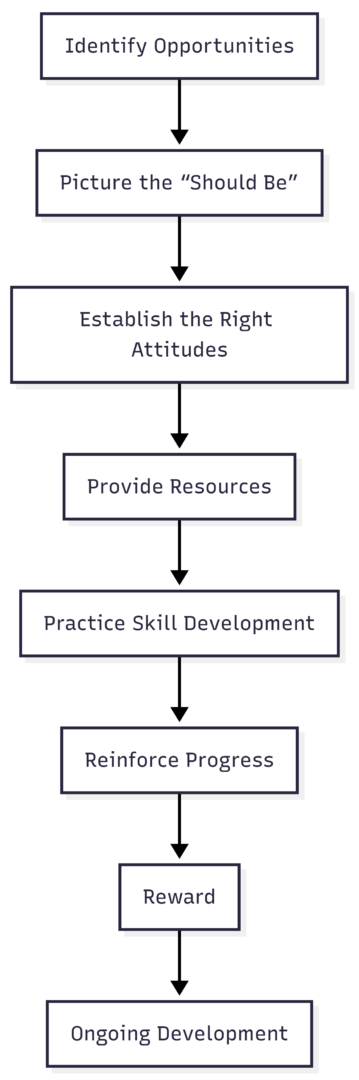
This structured approach turns potential into performance, particularly in high-stakes marine environments.
Tailoring Coaching for Gen Z in the Marine Industry
Gen Z craves social interaction and meaningful roles from day one. In marine settings, create 30-, 60-, and 90-day objectives to demonstrate value, such as contributing to voyage planning. Adopt fluidity by involving them in strategy, showing career mobility.
Address analytical gaps by guiding through problems in low-anxiety settings. For example, explain an engine issue, discuss solutions away from the site, then apply fixes. This builds thinking skills without overwhelm.
First-day experiences set the tone. Make them memorable with welcomes, pre-onboarding materials, and clear directions. Avoid confusion, like unclear boarding procedures, which can lead to quick exits given Gen Z’s options— from gig work to cruise line jobs.
Gen Z is experience-led, realistic, and driven. They fear missing out, so ensure authenticity: send swag, schedule online learning, and greet personally. Coaches should encourage curiosity by asking clarifying questions and checking for barriers, promoting independent problem-solving.
Neurological Insights and Effective Feedback
Neurologically, the brain favors habits, making insight moments—spotlights on new pathways—crucial for growth. Leaders must encourage and hold accountable to override biases.
Social media wires Gen Z for instant feedback and fear of errors. Provide multiple weekly check-ins; 60% prefer them, 40% daily. Simple acknowledgments build relationships.
Feedback should be direct yet encouraging. Acknowledge self-awareness, avoid sugarcoating, and end positively to foster positive mistake-making. Be blunt but empathetic, recognizing their self-deprecating tendencies.
Conclusion: Building a Future-Ready Marine Workforce
Retaining Gen Z requires shifting to guiding roles, supporting their values, and allowing unique identities. Be responsive, inclusive, and adaptive. Organizations that invest in these approaches will see heightened engagement across generations, ensuring the marine industry’s sustainability and innovation. By blending technology, purpose, and coaching, the sector can harness Gen Z’s potential for a thriving future.
Happy Boating!
Share Training Generation “Z” in the Marine Industry with your friends and leave a comment below with your thoughts.
Read Bow Thruster Capability Integrated into Yamaha’s Boat Control System until we meet in the next article.