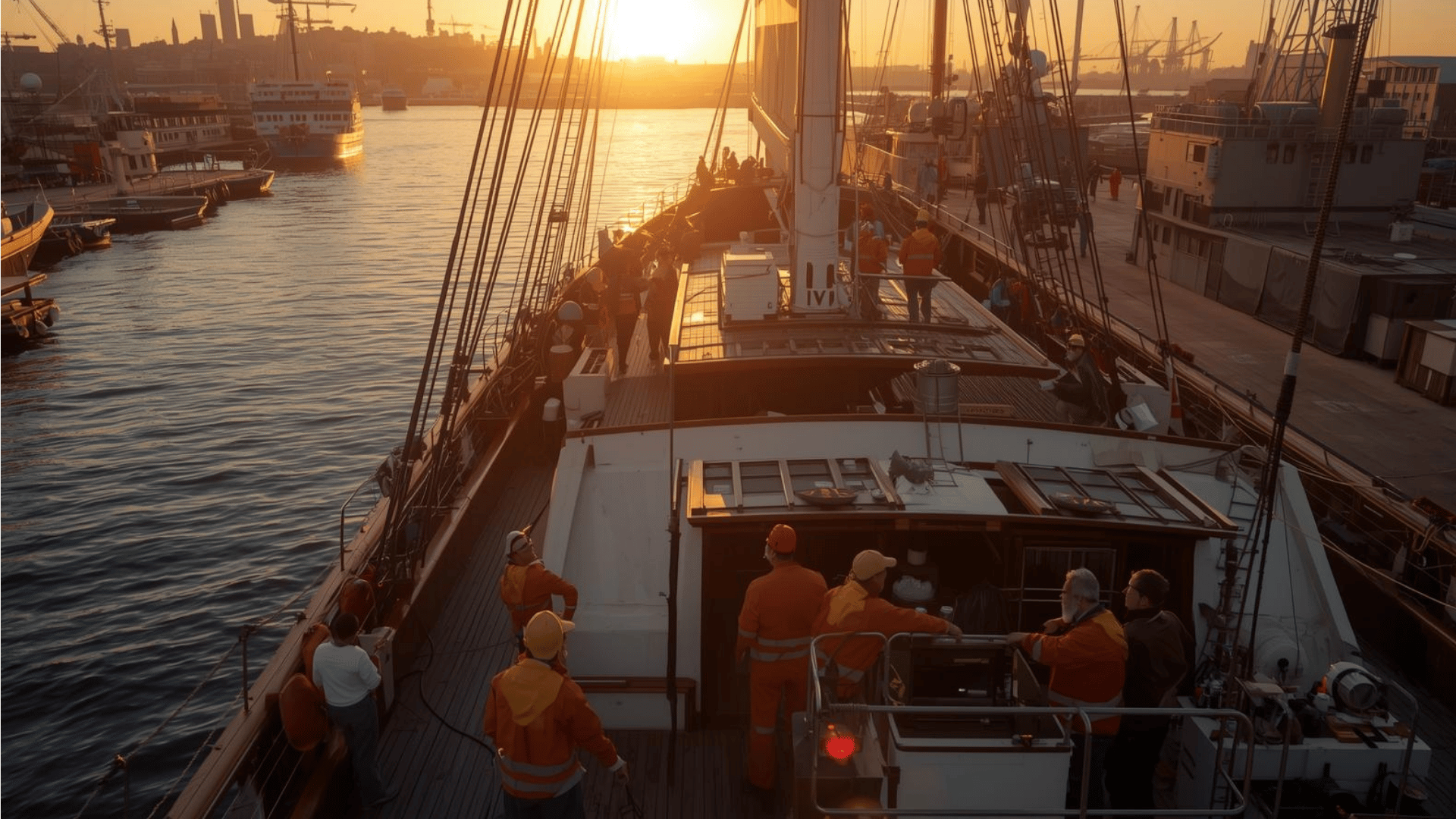
Mitsubishi launches training ship for maritime education and research
Mitsubishi Shipbuilding Co., Ltd., a key player in Japan’s shipbuilding industry and part of the Mitsubishi Heavy Industries (MHI) Group, has unveiled the WAKASHIO MARU, a cutting-edge training ship tailored for the National Institute of Technology (NIT), Toyama College.
This vessel represents a significant advancement in maritime education, blending practical training, scientific research, and emergency response capabilities into a single platform. As the fifth-generation training ship for the college and the first constructed by Mitsubishi Shipbuilding for this institution, the WAKASHIO MARU addresses the evolving needs of the maritime sector by equipping future seafarers with hands-on skills while supporting regional communities and oceanographic studies.
The launch of this vessel underscores Japan’s commitment to fostering a skilled workforce in maritime operations. With global shipping facing challenges like technological advancements, environmental regulations, and increasing natural disasters, ships like the WAKASHIO MARU play a crucial role in preparing the next generation.
It not only serves as a floating classroom but also as a versatile tool for research and disaster aid, reflecting a holistic approach to vessel design. In this comprehensive article, we delve into the ship’s features, specifications, and broader implications for the industry, providing insights for educators, researchers, and maritime enthusiasts.
The Role of Maritime Education in Modern Shipping
Maritime education has long been the backbone of the shipping industry, ensuring that seafarers are proficient in navigation, safety, and vessel management. In Japan, where the maritime sector contributes significantly to the economy through trade, fishing, and offshore activities, institutions like NIT Toyama College are pivotal in training professionals. The WAKASHIO MARU builds on this tradition by offering an immersive learning environment that goes beyond theoretical knowledge.
Historically, training ships have evolved from basic sailing vessels to sophisticated platforms incorporating digital tools and real-world simulations. The WAKASHIO MARU stands out by integrating sensory-based learning, where trainees engage all five senses to develop seamanship. This approach is essential in an era where automation and AI are reshaping jobs at sea, as emphasized by global forums on workforce development. By focusing on practical skills, the vessel helps bridge the gap between classroom theory and operational reality, reducing the learning curve for new mariners.
For NIT Toyama College, this ship marks a renewal of its training fleet. As a national institute emphasizing technical education, the college uses such vessels to conduct programs that align with industry standards. Students gain experience in ocean navigation, which includes route planning, weather assessment, and vessel handling under various conditions. This hands-on training is vital for certifications and careers in merchant shipping, fisheries, or naval services. Moreover, the ship’s design encourages community engagement, inspiring public interest in maritime affairs through outreach programs and events.
Design Features Tailored for Hands-On Training
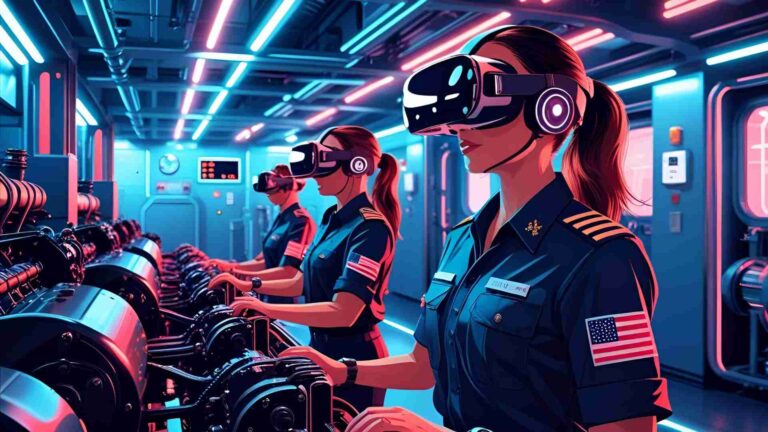
At the heart of the WAKASHIO MARU’s design is its emphasis on practical education. The vessel incorporates elements that simulate real shipboard life, allowing trainees to build essential skills through repetition and direct experience. One standout feature is the navigational simulator, a high-fidelity system that replicates bridge operations. Trainees can practice maneuvering in simulated environments, from calm seas to stormy conditions, honing their decision-making abilities without real-world risks.
Complementing this is the training switchboard, which provides interactive learning on electrical systems. Students can troubleshoot circuits, manage power distribution, and understand safety protocols in a controlled setting. This is particularly important in modern vessels where electrical failures can lead to catastrophic incidents. By offering repetitive drills, the switchboard ensures mastery of these critical systems.
The ship’s interior layout is meticulously planned to foster seamanship. Living quarters are individually designed for comfort, promoting a sense of personal responsibility among trainees. These spaces encourage discipline and camaraderie, key aspects of life at sea. Wooden decks, a nod to traditional shipbuilding, require regular maintenance such as polishing and varnishing. This not only teaches routine upkeep but also instills respect for maritime heritage. In an industry shifting toward composite materials, maintaining wooden elements preserves skills that remain relevant for specialized vessels.
A innovative aspect is the separation of the main machinery room and generator room. This design allows trainees to distinguish between different operational sounds and vibrations. For instance, the hum of diesel engines versus the whir of generators helps develop auditory diagnostic skills. In emergencies, recognizing anomalies by ear can prevent accidents, making this feature a practical safety enhancer. Overall, these elements create a multisensory training ground, engaging sight, sound, touch, smell, and even taste through onboard routines like meal preparation in galley simulations.
To visualize the training workflow on the WAKASHIO MARU, consider the following Mermaid flowchart, which outlines a typical trainee’s progression from basic orientation to advanced operations:
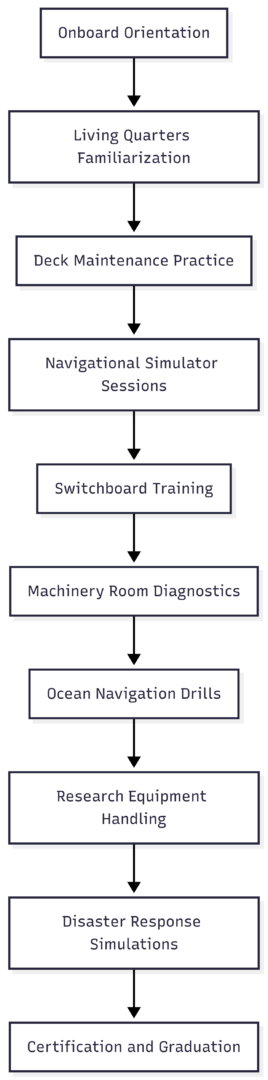
This flowchart illustrates how the ship’s features interconnect to provide a structured yet flexible training path, ensuring comprehensive skill development.
Advanced Research Capabilities for Oceanographic Studies
Beyond education, the WAKASHIO MARU is equipped as a research vessel, enabling detailed oceanographic surveys. Toyama Bay, with its unique characteristics, serves as the primary operational area. The bay’s central depth exceeds 1,000 meters, and it features a rare three-tiered water mass structure—layers of differing salinity, temperature, and density that influence marine ecosystems. This makes it an ideal site for studies on biodiversity, currents, and climate impacts.
The ship boasts extensive research equipment tailored to these conditions. Acoustic systems, including sonar and echo sounders, allow for seabed mapping and fish stock assessments. These tools provide high-resolution data on underwater topography and biological activity, supporting fisheries management and environmental monitoring. An A-frame crane facilitates the deployment of heavy instruments, such as submersibles or sampling devices, into deep waters. Multiple winches handle cables for towing sensors or retrieving samples, ensuring safe and efficient operations.
These capabilities enable a range of experiments, from water quality analysis to geological surveys. For example, researchers can study sediment layers to understand historical climate patterns or monitor pollution levels. The vessel’s design considers Toyama’s specifics, with reinforced structures for deep-sea work and storage for specialized gear. This integration of education and research allows students to participate in real projects, applying classroom knowledge to fieldwork.
In terms of data handling, the ship likely includes onboard labs for preliminary analysis, though specifics are integrated into the training areas. This dual-purpose setup maximizes utility, making the WAKASHIO MARU a valuable asset for academic institutions and government agencies. By contributing to ocean science, it aids in sustainable maritime practices, aligning with global goals for blue economy development.
Disaster Response: Enhancing Regional Resilience
One of the WAKASHIO MARU’s most versatile roles is as a disaster support vessel. Japan, prone to earthquakes, tsunamis, and typhoons, requires robust emergency infrastructure. The ship can serve as a mobile base station, providing communication hubs when land-based systems fail. This includes satellite links and radio relays to coordinate relief efforts.
It is equipped to supply fresh water and electricity, critical in post-disaster scenarios where utilities are disrupted. Onboard generators and desalination units ensure self-sufficiency, while storage tanks hold reserves for distribution. The vessel can transport aid materials, such as food, medical supplies, and equipment, to affected areas via its cargo holds and deck space.
Additionally, it offers temporary living quarters for evacuees or responders, with capacity for up to 60 persons. This feature transforms the ship into a floating shelter, complete with sanitary facilities and meal services. In simulations, trainees practice these roles, learning logistics like resource allocation and crowd management.
This multifunctionality reflects a trend in ship design toward resilience. By combining education with emergency capabilities, the WAKASHIO MARU contributes to community safety, potentially saving lives during crises. Its deployment in Toyama Bay positions it ideally for rapid response in coastal regions.
Detailed Specifications of the WAKASHIO MARU
To provide a clear overview, here is a table summarizing the main specifications of the WAKASHIO MARU. These details highlight its compact yet capable design, optimized for training and research without excessive scale.
| Specification | Details |
|---|---|
| Owner | National Institute of Technology, Toyama College |
| Length Overall (LOA) | Approximately 56.3 meters |
| Beam | Approximately 10.6 meters |
| Depth | Approximately 5.8 meters |
| Gross Tonnage | Approximately 370 tonnes |
| Capacity | Approximately 60 persons |
| Service Speed | 12.5 knots |
No pricing information is available, as the vessel is a custom build for educational purposes, funded through institutional and possibly governmental channels. These specs ensure maneuverability in bays and coastal waters, with fuel-efficient propulsion for extended operations.
Broader Implications for the Maritime Industry
The introduction of the WAKASHIO MARU signals Mitsubishi Shipbuilding’s ongoing commitment to innovation. As part of the MHI Group, the company leverages expertise in engineering to create vessels that meet diverse needs. This project enhances Japan’s maritime training infrastructure, addressing skill shortages in an aging workforce.
Globally, similar initiatives are emerging, with training ships incorporating green technologies like hybrid propulsion. While the WAKASHIO MARU focuses on diesel systems, its research tools could support studies on sustainable shipping, such as low-emission fuels or marine renewables.
For regional societies, the vessel promotes maritime awareness through public tours and workshops. This fosters interest in careers at sea, crucial for maintaining Japan’s shipping prowess. Moreover, its disaster role strengthens community ties, positioning NIT Toyama College as a societal pillar.
In the context of industry transitions, the ship aligns with calls for safety and innovation in shipping. By training personnel in advanced operations, it prepares them for autonomous vessels and digital navigation, ensuring competitiveness.
Conclusion: Charting a Course for the Future
The WAKASHIO MARU exemplifies how shipbuilding can intersect with education, research, and resilience. Mitsubishi Shipbuilding’s creation not only equips NIT Toyama College with a premier training platform but also advances ocean science and disaster preparedness. As it enters service, the vessel will inspire countless trainees, contribute to vital research, and stand ready for emergencies.
This launch reaffirms the importance of investing in maritime education amid evolving global challenges. For those in the field, the WAKASHIO MARU offers a model of integrated design, promising a brighter future for seafarers and coastal communities alike.
Happy Boating!
Share Mitsubishi launches training ship for maritime education and research with your friends and leave a comment below with your thoughts.
Read Challenges in global ballast water management until we meet in the next article.