Challenges in global ballast water management
Ballast water is essential for modern shipping, providing stability, reducing hull stress, enhancing propulsion, and compensating for weight changes from cargo, fuel, and water consumption.
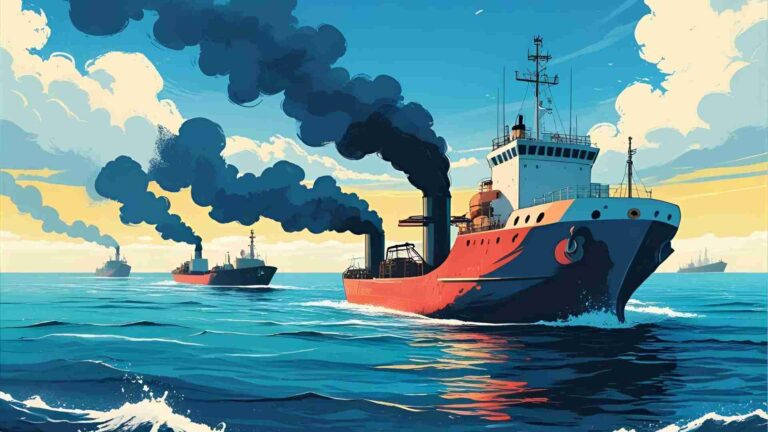
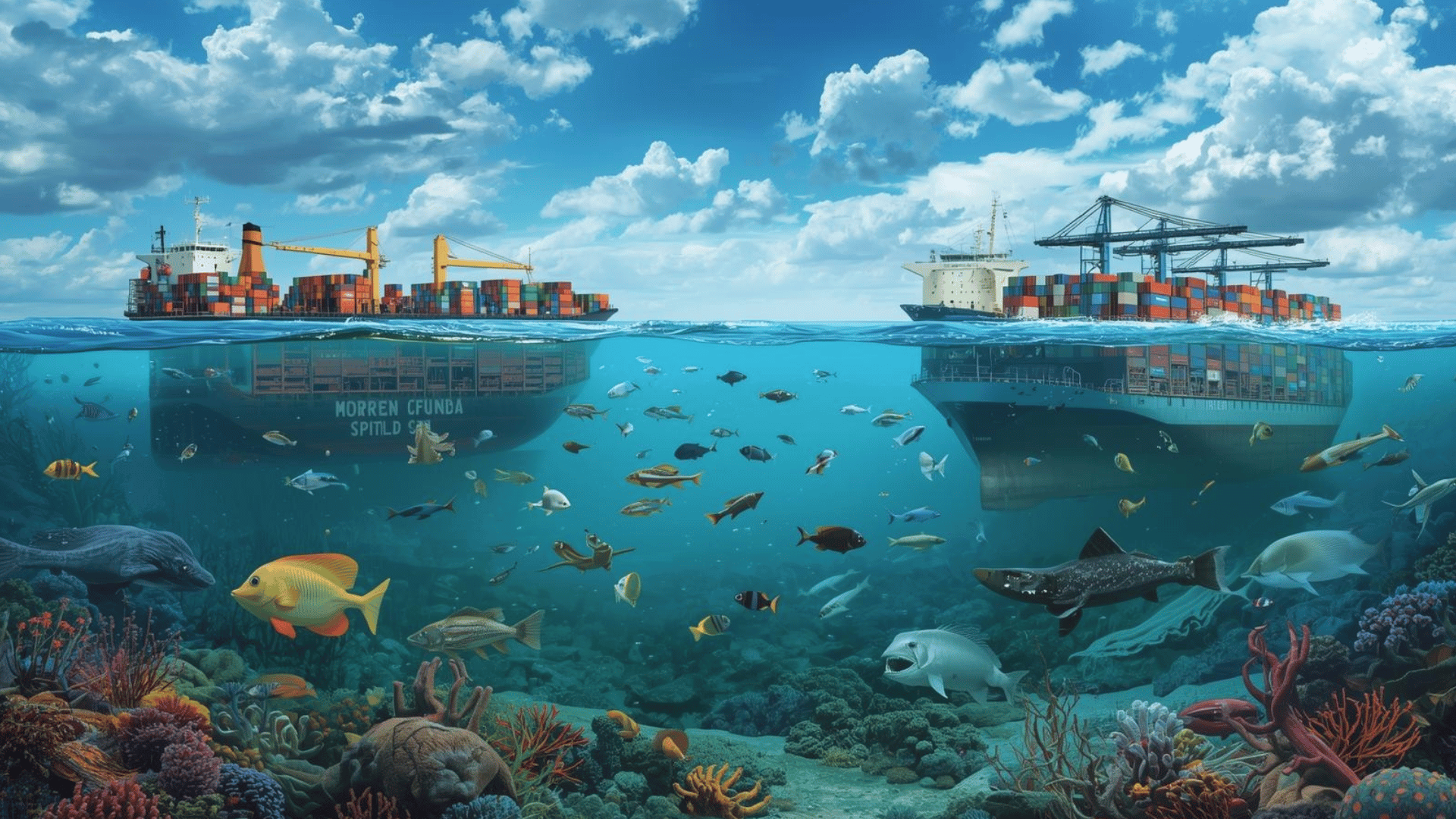
Ships pump in water to maintain safe operating conditions during voyages. However, this practice introduces serious ecological, economic, and health risks by transporting marine species like bacteria, microbes, invertebrates, eggs, cysts, and larvae across oceans. These organisms can survive in new environments, becoming invasive, out-competing native species, and causing pest outbreaks.
The global shipping industry, central to international trade, inadvertently spreads these invasive species through ballast water discharge. This has led to devastating impacts on marine ecosystems, biodiversity loss, and economic damage to industries like fisheries, aquaculture, tourism, and infrastructure. Invasive species disrupt food chains, clog waterways, harm fish populations, and even pose human health risks. The problem escalates with increasing seaborne trade volumes, making effective management critical.
Global ballast water management aims to prevent the transfer of harmful aquatic organisms while balancing logistical demands. The core challenge lies in merging international regulations, ship-specific configurations, and ecological conservation. Despite advancements, hurdles persist in regulatory compliance, technical limitations, environmental risks, economic burdens, and consistent invasive species control. This article delves into these challenges, drawing on scientific insights and industry practices to provide a comprehensive overview.
Estimates indicate a global annual ballast water volume of around 3500 million tons (Mton), with approximately 2800 Mton discharged into open seas from exchange operations. Tankers and bulk carriers handle the majority, accounting for about 76% of volumes, while general cargo and container vessels manage the rest. Understanding these scales underscores the urgency of addressing management challenges.
Regulatory and Compliance Issues
The International Maritime Organization (IMO) Ballast Water Management Convention (BWMC) sets the global standard for controlling invasive species transfer via ballast water. It requires ships to implement a Ballast Water Management Plan, maintain a Ballast Water Record Book, and follow procedures to meet discharge standards. The convention promotes ballast water exchange—replacing coastal water with open ocean water—as a transitional method, aiming for 95% volumetric efficiency through sequential or flow-through methods.
However, slow adoption has created a patchwork of international, regional, and national regulations. Ships operating across jurisdictions face compliance difficulties due to varying standards. For instance, some regions impose stricter rules, complicating global operations. The BWMC’s performance standard (Regulation D-2) limits viable organisms in discharged water: fewer than 10 viable organisms per cubic meter greater than or equal to 50 micrometers, and fewer than 10 viable organisms per milliliter between 10 and 50 micrometers, plus indicator microbe limits.
Compliance monitoring poses another hurdle. Vessels must undergo port state inspections, but limited resources, vast fleets, and inconsistent testing methods hinder enforcement. Recent analyses show non-compliance rates of 27-44% in operational systems, often due to contamination from uncleaned tanks or untreated water. Issues like insufficient crew training (affecting 20% of non-compliant cases), maintenance omissions (7%), ballast water contamination (13%), and system failures in challenging water quality (11%) exacerbate problems.
To illustrate the regulatory framework, consider the following flowchart depicting the ballast water management process under the BWMC:
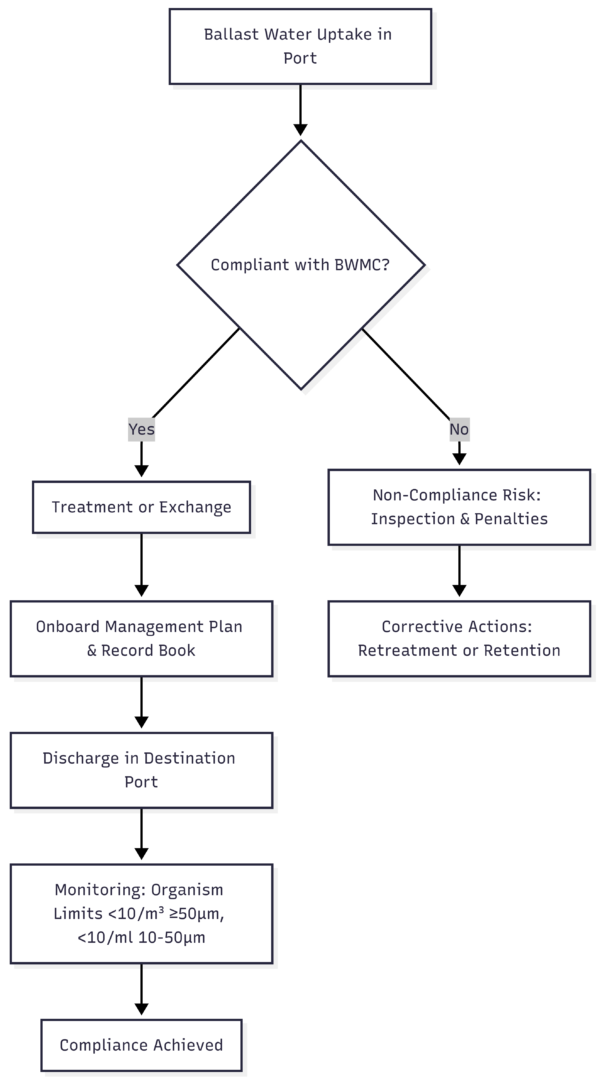
This diagram highlights decision points where regulatory adherence is critical, from uptake to discharge.
Shipowners must collaborate with classification societies like Bureau Veritas for system evaluations, ensuring structural and equipment compatibility. Harmonizing regulations through international cooperation remains key, but discrepancies persist, demanding adaptive strategies.
Technical and Operational Challenges
Ballast Water Treatment Systems (BWTS) are pivotal for compliance, but they face significant technical limitations. Systems must operate reliably under diverse conditions, including high turbidity, suspended solids, and varying water qualities, which can cause filter clogging, reduced efficacy, and failures.
Key technical issues include:
- Space Constraints: Retrofitting older ships is challenging due to limited onboard space. Compact systems are needed, but they often compromise performance.
- Energy Consumption: BWTS require substantial power, increasing fuel costs and emissions. Electrochlorination or UV systems, for example, demand consistent energy supply.
- Crew Training: Operators need specialized knowledge to maintain and troubleshoot systems. Inadequate training leads to operational errors.
Types of BWTS vary in approach:
- Physical Separation: Filtration or cyclonic separation removes larger organisms. Effective for particles >50µm but less so for smaller ones.
- Chemical Disinfection: Uses chlorine, ozone, or hydrogen peroxide to kill organisms. Highly effective but generates by-products.
- Biological/Advanced Oxidation: UV light or electrochlorination targets DNA, minimizing chemicals.
Specifications for common BWTS include treatment capacities from 50-10,000 m³/h, power requirements of 10-500 kW, and footprints of 5-50 m², depending on ship size.
The following table summarizes major BWTS types, specifications, and approximate costs (based on industry averages):
| BWTS Type | Treatment Method | Capacity Range (m³/h) | Power Consumption (kW) | Footprint (m²) | CAPEX (USD) per System | OPEX (USD/year) |
|---|---|---|---|---|---|---|
| UV-Based | Ultraviolet irradiation | 100-5,000 | 20-300 | 10-40 | 500,000-2,000,000 | 50,000-150,000 |
| Electrochlorination | Electrochemical generation of chlorine | 200-10,000 | 50-500 | 15-50 | 800,000-3,000,000 | 80,000-200,000 |
| Ozone | Ozone injection | 50-2,000 | 10-200 | 5-30 | 400,000-1,500,000 | 40,000-100,000 |
| Chemical Injection | Chlorine or other biocides | 100-4,000 | 15-250 | 8-35 | 600,000-2,500,000 | 60,000-180,000 |
CAPEX includes installation; OPEX covers maintenance, chemicals, and energy. Costs vary by ship size and vendor, with smaller operators facing higher relative burdens.
Operational challenges intensify on short coastal routes, where open ocean exchange isn’t feasible due to safety concerns like stability loss or weather. Medium and small vessels in areas like the North Sea or Mediterranean often discharge untreated water, heightening risks. Risk-based decision support systems, integrating port databases and species distributions, can prioritize high-risk routes for targeted treatment.
Environmental Risks Associated with Treatment
While BWTS mitigate invasive species spread, they introduce environmental risks. Chemical methods like chlorination or ozonation produce disinfection by-products (DBPs) such as trihalomethanes or bromates, potentially toxic to marine life. These residues can accumulate, affecting biodiversity and long-term ecosystem health.
For example, chlorine-based systems generate halogenated compounds that harm non-target organisms, including endangered species. Ozone treatments may form bromate ions, carcinogenic in high concentrations. Even UV systems, though chemical-free, require careful calibration to avoid incomplete deactivation, allowing organism regrowth.
The core goal—preventing harmful aquatic organism transfer—remains elusive without addressing these risks. Invasive species have caused massive ecological disruptions: out-competing natives, altering habitats, and driving biodiversity loss. Economic impacts include infrastructure damage, like clogging intake pipes, costing industries millions annually.
Balancing treatment efficacy with minimal environmental harm demands sustainable technologies. Biological methods using less hazardous agents show promise but face scalability issues. Ongoing research focuses on DBP neutralization and eco-friendly alternatives to ensure treatments don’t exacerbate problems.
Economic Factors in Ballast Water Management
High costs deter widespread adoption, especially for smaller operators. CAPEX for BWTS installation ranges from $400,000 to $3,000,000 per system, plus retrofitting expenses. OPEX, including maintenance, energy, chemicals, and training, adds $40,000-$200,000 annually.
Larger ships amortize costs better, but the global fleet’s diversity amplifies disparities. Economic analyses show tankers and bulk carriers, handling 76% of ballast volumes, invest heavily, while general cargo vessels struggle. Non-compliance penalties, though, can exceed these costs, incentivizing investment.
Funding mechanisms like green financing or subsidies could alleviate burdens. Shipping companies can mitigate expenses by selecting efficient systems and optimizing operations, such as route planning to minimize treatment needs.
Invasive Species Management and Risk Assessment
The primary objective is curbing invasive species transfer, recognized as a top threat to ocean health. Species like the zebra mussel demonstrate impacts, with annual control costs in the hundreds of millions.
Risk-based approaches assess routes, volumes, and species viability. Global traffic concentrates in the northern hemisphere, with 85% in the North Atlantic and Pacific. Major routes for tankers and bulkers are well-defined, allowing targeted management.
Untreated discharges total around 2200 Mton annually, with 24% from mixed cargo vessels. Ensuring consistent treatment across ship types and routes requires robust data on ports, species, and vectors like hull fouling.
The following diagram illustrates a risk assessment workflow:
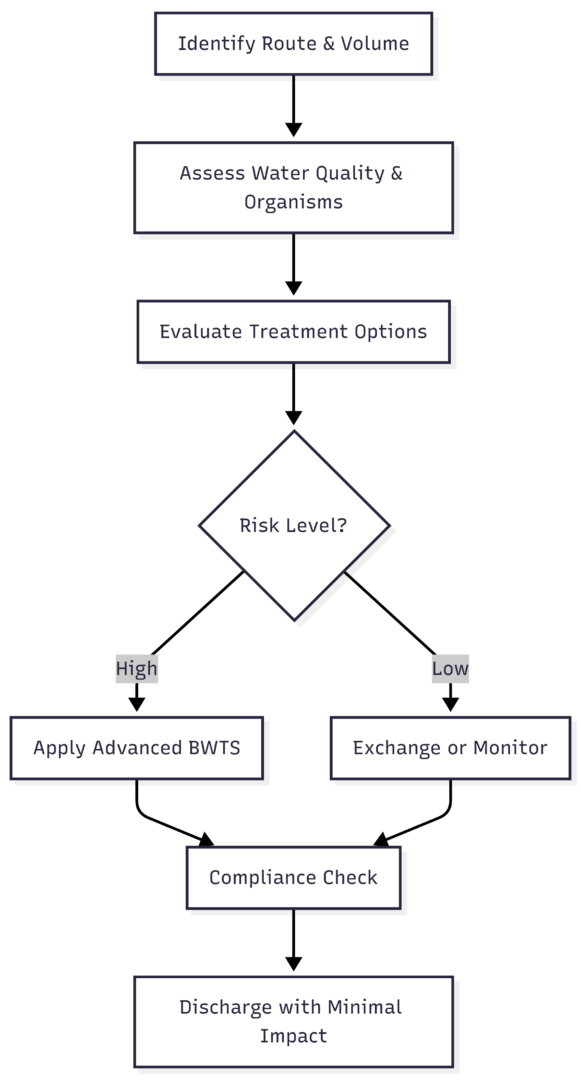
This workflow aids in differentiating treatment levels while maintaining low risks.
Role of Shipping Companies and Future Outlook
Shipping companies are crucial in advancing management. By developing compliant plans, investing in certified BWTS, and partnering with regulators and researchers, they can reduce ecological footprints. Collaboration with entities like classification societies ensures optimal system selection.
Supporting research into innovative technologies—such as improved monitoring and DBP-free methods—drives progress. Industry forums facilitate knowledge sharing, addressing implementation gaps.
Effective management demands standardized, reliable technologies and global cooperation. While challenges persist, holistic approaches integrating equipment, crew practices, and regulations promise sustainable solutions. Shifting focus from system failures to comprehensive ship compliance will enhance outcomes, protecting marine environments for future generations.
Happy Boating!
Share Challenges in global ballast water management with your friends and leave a comment below with your thoughts.
Read Anglo-Eastern Opens New Maritime Training Center Site until we meet in the next article.